Races and Events – The event

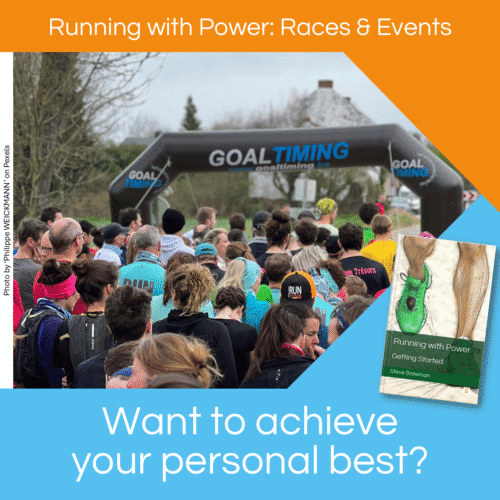
Picture of runners waiting to start an event

๐‘๐š๐œ๐ž๐ฌ & ๐„๐ฏ๐ž๐ง๐ญ๐ฌ โ€“ ๐“๐ก๐ž ๐ž๐ฏ๐ž๐ง๐ญ

Power can help you perform your personal best on the day.

How? By:
โšก identifying a single target you can maintain throughout the event
โšก helping you ๐‘›๐‘œ๐‘ก go out too fast
โšก reducing anxiety associated with trying to achieve a goal time

๐„๐ฏ๐ž๐ง๐ญ ๐ญ๐š๐ซ๐ ๐ž๐ญ๐ฌ

Before the event, power race calculators use your current fitness, your fatigue resistance (or stamina) and how effectively you convert effort into forward motion to identify a race power target.

Some calculators also allow you to create scenarios, by varying your fatigue resistance or running effectiveness to show best case/worst case targets.

These calculations are based on you โ€“ your fitness, your capabilities.

Which means power targets are personal โ€“ they identify an effort level you can maintain throughout the event.

It also means that you can’t run with pacers, as theyโ€™ll be running to a pace target.

๐ƒ๐จ๐งโ€™๐ญ ๐ ๐จ ๐จ๐ฎ๐ญ ๐ญ๐จ๐จ ๐Ÿ๐š๐ฌ๐ญ

Your race power target also helps prevent you starting the event too fast โ€“ at too high an effort.

Which means you should have enough energy left to finish the event strong.

๐‘๐ž๐๐ฎ๐œ๐ž ๐š๐ง๐ฑ๐ข๐ž๐ญ๐ฒ

Thereโ€™s nothing worse than running to a (hopeful) goal time, translating that into pace targets, then finding that youโ€™re falling behind the pace.

And thereโ€™s nothing better than running to a power target that represents the effort you can maintain throughout the event โ€ฆ to achieve your personal best on the day.

๐‘บ๐’‰๐’๐’–๐’๐’…๐’’๐’• ๐’š๐’๐’– ๐’ƒ๐’† ๐‘น๐’–๐’๐’๐’Š๐’๐’ˆ ๐’˜๐’Š๐’•๐’‰ ๐‘ท๐’๐’˜๐’†๐’“?

โ“ Questions?
๐Ÿ“– Getting Started

Races & Events – The event

Races and Events – Ready, set, go!

Picture of runners waiting to start an event

๐‘๐š๐œ๐ž๐ฌ ๐š๐ง๐ ๐„๐ฏ๐ž๐ง๐ญ๐ฌ โ€“ ๐‘๐ž๐š๐๐ฒ, ๐ฌ๐ž๐ญ, ๐ ๐จ!

Youโ€™ve trained, youโ€™ve tapered, and the event is just about here.

Using power, whatโ€™s important?
โŒš Your watch setup, so that you donโ€™t get distracted during the event
๐Ÿชซ Your equipment, so that itโ€™s fully charged
โšก Your warm-up, so that youโ€™re primed for the event

๐–๐š๐ญ๐œ๐ก ๐ฌ๐ž๐ญ๐ฎ๐ฉ

Iโ€™ve arrived at a โ€˜less is moreโ€™ philosophy.

It took a few years, but gradually, Iโ€™ve come to trust power (and power metrics) and chosen the few metrics I want showing on my watch.

Iโ€™d recommend setting up your watch to:
โœ… auto-lap every mile or kilometre (your preference) to reset lap average power
โœ… show lap and 3s average power (or real-time power if 3s average isnโ€™t an option)
โœ… include last lap power if you have it, so that you donโ€™t need to glance down every auto-lap

Resist the temptation to include elapsed time, time of day, pace or heart rate, as these may distract you from maintaining your power target.

๐‚๐ก๐š๐ซ๐ ๐ž ๐ฒ๐จ๐ฎ๐ซ ๐ž๐ช๐ฎ๐ข๐ฉ๐ฆ๐ž๐ง๐ญ

A simple reminder โ€“ to avoid flat batteries part-way through the event.

๐–๐š๐ซ๐ฆ-๐ฎ๐ฉ / ๐ฉ๐ซ๐ข๐ฆ๐ข๐ง๐ 

Your warm-up should include mobilisation and dynamic stretching and 5-10 minutes of jogging โ€“ no different than if you were using pace or heart rate.

Then run some short intervals at just below Threshold Power, just above Threshold Power and finish with some strides or short sprints. This will prime your different energy systems โ€“ with power, you can ensure your intervals are at the correct intensities.

Ideally, prime the day before the event and during the 1-2 hours before your start time, so that you donโ€™t start the event feeling sluggish.

๐‘บ๐’‰๐’๐’–๐’๐’…๐’’๐’• ๐’š๐’๐’– ๐’ƒ๐’† ๐‘น๐’–๐’๐’๐’Š๐’๐’ˆ ๐’˜๐’Š๐’•๐’‰ ๐‘ท๐’๐’˜๐’†๐’“?

โ“ Questions?
๐Ÿ“– Getting Started

Races & Events – Ready, set, go!

Races and Events – Tapering

Picture of runners waiting to start an event

๐‘๐š๐œ๐ž๐ฌ & ๐„๐ฏ๐ž๐ง๐ญ๐ฌ โ€“ ๐“๐š๐ฉ๐ž๐ซ๐ข๐ง๐ 

Tapering aims to achieve a controlled reduction in your training so that your body has time to recover from training fatigue without losing too much fitness.

It aims to deliver you to the start line with maximum fitness and ‘on fresh legs’.

Itโ€™s a balance. Start the taper too soon, and youโ€™ll miss out on training; too late, youโ€™ll arrive with tired or heavy legs.

๐๐ฅ๐š๐ง๐ง๐ข๐ง๐  ๐ฒ๐จ๐ฎ๐ซ ๐ญ๐š๐ฉ๐ž๐ซ

Tapering uses two metrics:
โœ… Your Stress Balance. As you approach your event, you can plan your workouts so that your Stress Balance becomes more positive.
โœ… Your Ramp Rate. As you approach your event, you can plan your workouts so that your Ramp Rate becomes less positive.

Both metrics use planned numbers based on your upcoming workouts to โ€˜look aheadโ€™ at the numbers that will be in place on the event date.

๐–๐ก๐š๐ญ ๐ฌ๐ก๐จ๐ฎ๐ฅ๐ ๐ฒ๐จ๐ฎ ๐ฎ๐ฌ๐ž ๐š๐ฌ ๐ญ๐š๐ซ๐ ๐ž๐ญ๐ฌ?

This depends on the event duration (shorter events usually need a shorter taper) and how the event factors into your longer-term plans:
๐ŸŽฏ If itโ€™s the event youโ€™ve been training for, you might aim for a positive training balance and a negative ramp rate, ‘giving up’ some training leading up to the event.
๐ŸŽฏ If itโ€™s an event youโ€™re using to test fitness or race-day strategy, you might aim for a training balance around zero but maintain a positive ramp rate, scaling back your training but not giving up too much.

There are many other things you should also consider when tapering, but using your training load metrics provides a solid foundation.

๐‘บ๐’‰๐’๐’–๐’๐’…๐’’๐’• ๐’š๐’๐’– ๐’ƒ๐’† ๐‘น๐’–๐’๐’๐’Š๐’๐’ˆ ๐’˜๐’Š๐’•๐’‰ ๐‘ท๐’๐’˜๐’†๐’“?

โ“ Questions?
๐Ÿ“– Getting Started

Races & Events – Tapering

Races and Events – Race Targets

Picture of runners waiting to start an event

๐‘๐š๐œ๐ž๐ฌ & ๐„๐ฏ๐ž๐ง๐ญ๐ฌ โ€“ ๐‘๐š๐œ๐ž ๐“๐š๐ซ๐ ๐ž๐ญ๐ฌ

If youโ€™re like I was (before power), your race target is a goal time: โ€œIโ€™d love to break 1 hour for the 10kโ€, or โ€œโ€ฆ 2 hours for a halfโ€.

You may have used online calculators to put in a 5k time (or an 800m time) to see what your equivalent 10k or half time would be.

And then when you ran the event, you struggled to achieve the predicted time โ€ฆ because it was more โ€˜hopefulโ€™ than a prediction, based on using a single data point with data averaged across thousands of runners, many of whom are nothing like you.

๐๐จ๐ฐ๐ž๐ซ ๐ญ๐š๐ซ๐ ๐ž๐ญ๐ฌ ๐š๐ซ๐ž ๐๐ข๐Ÿ๐Ÿ๐ž๐ซ๐ž๐ง๐ญ

Event targets when running with power are based on:
โœ… your current running fitness
โœ… your measured fatigue resistance (or stamina)
โœ… your proven ability to convert effort into forward motion

All three (metrics) are based on your completed workouts and are individual to you.

๐‡๐จ๐ฐ ๐š๐ซ๐ž ๐ซ๐š๐œ๐ž ๐ญ๐š๐ซ๐ ๐ž๐ญ๐ฌ ๐œ๐š๐ฅ๐œ๐ฎ๐ฅ๐š๐ญ๐ž๐?

If you use a Stryd footpod, you have access to the Stryd Race Power Calculator. The calculator will prompt you for the information needed for the calculation.

If you donโ€™t use a Stryd footpod (or even if you do), you also have access to SuperPower Calculator for Sheets (SPCs). Steve Palladino has recorded several videos showing how to use SPCs to calculate race scenarios.

๐๐จ ๐ฆ๐จ๐ซ๐ž ‘๐ก๐จ๐ฉ๐ž๐Ÿ๐ฎ๐ฅ’ ๐ ๐จ๐š๐ฅ ๐ญ๐ข๐ฆ๐ž๐ฌ

Race power targets represent the effort you should be able to maintain for the entire event. The calculators can also provide an estimated finish time, but this is an estimation โ€“ instead, run to effort โ€ฆ and let the time take care of itself.

๐‘บ๐’‰๐’๐’–๐’๐’…๐’’๐’• ๐’š๐’๐’– ๐’ƒ๐’† ๐‘น๐’–๐’๐’๐’Š๐’๐’ˆ ๐’˜๐’Š๐’•๐’‰ ๐‘ท๐’๐’˜๐’†๐’“?

โ“ Questions?
๐Ÿ“– Getting Started

More about the Race Calculators can be found at:
๐Ÿ”น Stryd: Race Power Calculator in PowerCenter
๐Ÿ”น SuperPower Calculator for Sheets (click to download a copy)
Steve Palladino’s videos are on YouTube

Races & Events – Race Targets

Races and Events – with Power

Picture of runners waiting to start an event

๐‘๐š๐œ๐ž๐ฌ & ๐„๐ฏ๐ž๐ง๐ญ๐ฌ โ€“ ๐ฐ๐ข๐ญ๐ก ๐๐จ๐ฐ๐ž๐ซ

Races & Events are a little different when Running with Power.

The next few posts will dig into the detail, but in summary (and as a taster):
โšก Your race-day power target is based on your fitness and capabilities
โšก Tapering uses power-based metrics to determine when and how to taper
โšก On the day, your target is your target for the entire event (no adjustments needed)
โšก You wonโ€™t be able to (or need to) run with pacers
โšก Youโ€™ll run to power, to achieve your personal best on the day

This is quite different than:
โŒ looking up a hopeful goal time from a table compiled using data from thousands of runners (many of whom are nothing like you)
โŒ tapering for a period and approach determined using general guidelines
โŒ wearing a wrist band telling you your pace (per mile or kilometre) based on whether the section is uphill, downhill or flat
โŒ going out too fast and suffering the consequences later in the event
โŒ trying to keep up with pacers to achieve your hopeful goal time

It takes a little getting used to.

Especially the part about running to a power target rather than a (hopeful) goal time.

But this effort-based approach has been proven hundreds of times and has produced many unexpected personal bests.

๐‘บ๐’‰๐’๐’–๐’๐’…๐’’๐’• ๐’š๐’๐’– ๐’ƒ๐’† ๐‘น๐’–๐’๐’๐’Š๐’๐’ˆ ๐’˜๐’Š๐’•๐’‰ ๐‘ท๐’๐’˜๐’†๐’“?

โ“ Questions?
๐Ÿ“– Getting Started

Racing & Events – with Power

Why Steve runs and coaches with power

Why Steve runs and coaches using power

๐–๐ก๐ฒ ๐๐จ๐ž๐ฌ ๐’๐ญ๐ž๐ฏ๐ž, ๐š ๐”๐Š-๐›๐š๐ฌ๐ž๐ ๐ซ๐ฎ๐ง๐ง๐ž๐ซ ๐š๐ง๐ ๐œ๐จ๐š๐œ๐ก, ๐ฎ๐ฌ๐ž ๐ฉ๐จ๐ฐ๐ž๐ซ?

There are two reasons:
โšก The numbers match how hard youโ€™re working โ€ฆ they just โ€˜feel rightโ€™
๐ŸŽฏ Targets (for training and racing) are based on you โ€ฆ power is personal

Let me unpack those.

๐“๐ก๐ž ๐ง๐ฎ๐ฆ๐›๐ž๐ซ๐ฌ ๐ฆ๐š๐ญ๐œ๐ก ๐ก๐จ๐ฐ ๐ก๐š๐ซ๐ ๐ฒ๐จ๐ฎโ€™๐ซ๐ž ๐ฐ๐จ๐ซ๐ค๐ข๐ง๐ 

Power provides numbers representing how hard youโ€™re working while running โ€“ your effort.

Running by effort isnโ€™t new โ€“ runners have used โ€˜Perceived Exertionโ€™ for many years. What is new is being able to put numbers to your effort.

Are the numbers actionable?

YES, based on using power since 2018 โ€ฆ and on multiple independent studies.

๐“๐š๐ซ๐ ๐ž๐ญ๐ฌ ๐š๐ซ๐ž ๐›๐š๐ฌ๐ž๐ ๐จ๐ง ๐ฒ๐จ๐ฎ

Once you can measure your effort, all sorts of things become possible โ€“ you can:
โœ… assess your running fitness at any point in your training
โœ… ensure your training stays productive by setting workout targets based on your current fitness, rather than on a hopeful goal time
โœ… reduce your risk of injury using completed workouts to track your training load
โœ… personalise your race-day targets to achieve the best result youโ€™re capable of on the day

All of these are calculated using your completed workouts. Power really is Personal.

๐–๐ก๐š๐ญ ๐๐จ๐ž๐ฌ ๐ญ๐ก๐ข๐ฌ ๐ฆ๐ž๐š๐ง ๐Ÿ๐จ๐ซ ๐œ๐จ๐š๐œ๐ก๐ข๐ง๐ ?

Using my runnersโ€™ completed workouts, I can build a detailed profile of each runner based on what they can achieve (right now). And I can use that profile to set targets that are individual to each runnerโ€™s capability (right now), to get the most from their training while minimising injury risk.

I can do all of this virtually, to coach runners in the UK, the US, or any other place worldwide.

Power (and the system behind it) provides a science-backed, metrics-based, individualised approach to training and racing โ€“ for runners and for coaches.

๐‘บ๐’‰๐’๐’–๐’๐’…๐’’๐’• ๐’š๐’๐’– ๐’ƒ๐’† ๐‘น๐’–๐’๐’๐’Š๐’๐’ˆ ๐’˜๐’Š๐’•๐’‰ ๐‘ท๐’๐’˜๐’†๐’“?

โ“ Questions?
๐Ÿ“– Getting Started

Why Steve runs and coaches with power

Why Asya runs with power

Asya, running with power in the US

๐–๐ก๐ฒ ๐๐จ๐ž๐ฌ ๐€๐ฌ๐ฒ๐š ๐ซ๐ฎ๐ง ๐ฐ๐ข๐ญ๐ก ๐ฉ๐จ๐ฐ๐ž๐ซ?

โœ… Initially, I wanted accurate pace and distance

I did not get a power meter to run with power (initially). Mainly, I was frustrated by terrible GPS distance and pace tracking in NYC where I live and run. I knew from past experiences that a foot pod with an accelerometer would be able to get far more precise data about my pace and distance and in my world data is good – hey, Iโ€™m an engineer, more data is always better! ๐Ÿ™‚

โœ… Then I discovered Power=Effort!

It wasnโ€™t till I started reading about training with power on Stryd website that I realized that in addition to pace and distance the pod can measure actual effort which seemed amazing to me and once I realized I could run with steady effort just by sticking to a number, there was no going back. Before long, I signed up for a power-based training program and finished a half-marathon worrying only about power and had the same amazing experience with both training, and racing. 

โœ… I know exactly how hard Iโ€™m working when running

Iโ€™ve been using different power-based programs since and I canโ€™t imagine doing it any other way – I know exactly how hard Iโ€™ve been working, and when I can push harder, no matter where Iโ€™m running, and as a bonus, the pace and distance measurements are always spot-on.

โœ… Every runner should have a โ€˜coach in a podโ€™!

Power makes it so much easier to know youโ€™re expending appropriate effort. And donโ€™t be misled by the name – power isnโ€™t just for younger or faster runners, in fact it helps weaker/slower/newer runners even more than experienced fast runners. Itโ€™s like having a coach in a pod!

๐‘บ๐’‰๐’๐’–๐’๐’…๐’’๐’• ๐’š๐’๐’– ๐’ƒ๐’† ๐‘น๐’–๐’๐’๐’Š๐’๐’ˆ ๐’˜๐’Š๐’•๐’‰ ๐‘ท๐’๐’˜๐’†๐’“?

โ“ Questions?
๐Ÿ“– Getting Started

Why Asya runs with power

Why Kirke runs with power

Kirke running with power

๐–๐ก๐ฒ ๐๐จ๐ž๐ฌ ๐Š๐ข๐ซ๐ค๐ž ๐ซ๐ฎ๐ง ๐ฐ๐ข๐ญ๐ก ๐ฉ๐จ๐ฐ๐ž๐ซ?

โœ… Power is an objective and consistent measure of effort.

Power is an estimate of your overall metabolic energy expenditure rate. It doesn’t care about your motivation (or lack of motivation) for a given effort. It isn’t fooled by the surge of adrenaline at the start of a race. And itโ€™s not affected by ego or your competitive instincts.

โœ… Power is “portable” across different running conditions.

If youโ€™re running Uphill or downhill, changes in effort due to slope are accounted for. If youโ€™re running into a headwind or with a tailwind, changes in effort due to variations in wind speed and direction are accounted for. If youโ€™re on track, road or trail, power works well across varying running surfaces.

Pace is not very portable, Grade Adjusted Pace (GAP) is more portable but still does not account for varying wind conditions.

Heart Rate is more portable than pace, but subject to environmental conditions, drift, and lag.

โœ… Power is responsive.

Changes in intensity are reflected quickly, allowing real-time feedback. And power is much more responsive than heart rate.

โœ… Power provides a good structure for training zones, workout targets, and race planning.

Critical Power (CP), Reserve Work Capacity (RWC), and fatigue characteristics derived from maximal efforts can provide an accurate snapshot of a runner’s capabilities. And power history provides an excellent basis for race planning.

โœ… Power provides a good basis for tracking running stress and training loads.

Power can find the โ€œsweet spotโ€ between overtraining and injury (by increasing load too fast) and stimulating performance improvements (by increasing load fast enough).

๐‘บ๐’‰๐’๐’–๐’๐’…๐’’๐’• ๐’š๐’๐’– ๐’ƒ๐’† ๐‘น๐’–๐’๐’๐’Š๐’๐’ˆ ๐’˜๐’Š๐’•๐’‰ ๐‘ท๐’๐’˜๐’†๐’“?

โ“ Questions?
๐Ÿ“– Getting Started

Why Kirke runs with power

Why Fred coaches with power

Fred, a trail running coach in South Africa

๐–๐ก๐ฒ ๐๐จ๐ž๐ฌ ๐…๐ซ๐ž๐, ๐š ๐ญ๐ซ๐š๐ข๐ฅ ๐ซ๐ฎ๐ง๐ง๐ข๐ง๐  ๐œ๐จ๐š๐œ๐ก ๐ข๐ง ๐’๐จ๐ฎ๐ญ๐ก ๐€๐Ÿ๐ซ๐ข๐œ๐š, ๐ฎ๐ฌ๐ž ๐ฉ๐จ๐ฐ๐ž๐ซ?

โœ… Itโ€™s an objective, instant measure of effort

Power gives my athletes objective data that pace and heart rate canโ€™t. It reacts instantly and uniformly, no matter the terrain, temperature, or excitement of the moment. On technical trails and hills where pace is meaningless and heart rate lags, power shows the real effort being produced.

โœ… It works for intervals, for climbs, for descentsโ€ฆ

Short intervals under 20 seconds, long intervals up to 10 minutes, climbs and even descents all benefit from training with power. More often than not, athletes learn to slow down a little on the climbs and to push more on the downhills. One warning โ€“ avoid power targets on steep technical downhills where skill is the primary factor for how fast one can descend.

โœ… It allows runners to experiment

I also use power to teach awareness. Iโ€™ll have my runners experiment with their form, shift hips, focus on reducing ground contact, drive the knees, etc. and notice the impact of that on power. It becomes a feedback loop for improving form and economy.

โœ… It keeps runners on target on race-day

On race day, power keeps trail runners in control. Heart rate spikes with adrenaline, and pace is useless on technical ground. Power keeps athletes from going out too hard at the start of a race, and itโ€™s a reality check deep into the event to keep them moving when attention flags.

โœ… The longer you use it, the better you get

I noticed that training with power smooths out inefficiencies with prolonged use. As a coach, itโ€™s proven to be extremely useful in improving running economy on all terrains.

๐‘บ๐’‰๐’๐’–๐’๐’…๐’’๐’• ๐’š๐’๐’– ๐’ƒ๐’† ๐‘น๐’–๐’๐’๐’Š๐’๐’ˆ ๐’˜๐’Š๐’•๐’‰ ๐‘ท๐’๐’˜๐’†๐’“?

โ“ Questions?
๐Ÿ“– Getting Started

Why Fred coaches with power

Why Onno runs with power

Onno with a medal and a new PB

๐–๐ก๐ฒ ๐๐จ๐ž๐ฌ ๐Ž๐ง๐ง๐จ ๐ซ๐ฎ๐ง ๐ฐ๐ข๐ญ๐ก ๐ฉ๐จ๐ฐ๐ž๐ซ?

โœ… Stop chasing faster paces or comparing to others

When I started running a couple of years ago, I found myself chasing faster paces during training and comparing myself to others. Which felt good for a single session or two, but inevitably led to issues down the road: fatigue, lack of adaptation and injury.

โœ… Manage your effort

Especially for those new to running there is a power-full tool, that allows you to manage your effort. By running at the right intensity in all circumstances, not too hard and not too slow, you challenge your body just the right amount, and with good rest and nutrition you can achieve optimal adaptation.

โœ… Relax into your running

Running with Stryd, running based on my effort (in Watts) instead of pace, took ego out of the equation. I wasnโ€™t trying to run too hard going up hill or facing headwinds. It made running more relaxed, as I learned how to run by feel/effort.

โœ… An unforgettable marathon, and a new PB

I just ran my second marathon using Stryd and I ran the whole thing at the correct effort. My Stryd power meter allowed me to run consistently at the right intensity. This allowed me to relax into the speed I could maintain and make this marathon unforgettable.

And I ran a new PB to boot!

๐‘บ๐’‰๐’๐’–๐’๐’…๐’’๐’• ๐’š๐’๐’– ๐’ƒ๐’† ๐‘น๐’–๐’๐’๐’Š๐’๐’ˆ ๐’˜๐’Š๐’•๐’‰ ๐‘ท๐’๐’˜๐’†๐’“?

โ“ Questions?
๐Ÿ“– Getting Started

Why Onno runs with power