Choosing Power Apps

Power apps - calculating metrics

๐‚๐ก๐จ๐จ๐ฌ๐ข๐ง๐  ๐ฉ๐จ๐ฐ๐ž๐ซ ๐š๐ฉ๐ฉ๐ฌ

Power is a complete system using effort as its fundamental metric.

Power uses your second-by-second effort from completed workouts to calculate metrics that build a detailed picture of your individual running capabilities.

Imagine you run 3 times per week for around an hour each time. Thatโ€™s 60 pieces of data per minute, 3600 per hour and over 3 runs, over 10,000 pieces of data. Thatโ€™s a lot of data!

Which is why power relies on power-aware applications (โ€˜appsโ€™) to calculate your metrics.

๐‚๐š๐ง ๐ฒ๐จ๐ฎ ๐ฎ๐ฌ๐ž ๐š๐ง๐ฒ ๐š๐ฉ๐ฉ?

The choice is yours, but some apps are more power-aware than others, with the best apps able to calculate the most important metrics.

๐–๐ก๐ข๐œ๐ก ๐ฆ๐ž๐ญ๐ซ๐ข๐œ๐ฌ ๐š๐ซ๐ž ๐ฆ๐จ๐ฌ๐ญ ๐ข๐ฆ๐ฉ๐จ๐ซ๐ญ๐š๐ง๐ญ?

โœ… Threshold Power. Represents your current running fitness.

โœ… Stress Score. A score (per workout) that combines โ€˜how hard?โ€™ and โ€˜how long?โ€™ to represent the workoutโ€™s metabolic stress โ€“ its impact on your body.

โœ… Stress Balance. Indicates whether your training is โ€˜productiveโ€™  โ€“ enough stress to encourage adaptations, but not so much that there is a greater risk of injury or over-training.

โœ… Ramp Rate. Replaces โ€˜the 10% ruleโ€™ with a metric based on your training volume and intensity, to monitor whether youโ€™re adding training load too quickly.

โœ… Running Effectiveness. Measures how effectively you convert power into speed, used to estimate finish times, to assess changes to your running form and to evaluate your fatigue resistance.

There are other criteria that will influence your choice of apps, but being able to obtain these metrics may be the most important.

๐‘บ๐’‰๐’๐’–๐’๐’…๐’’๐’• ๐’š๐’๐’– ๐’ƒ๐’† ๐‘น๐’–๐’๐’๐’Š๐’๐’ˆ ๐’˜๐’Š๐’•๐’‰ ๐‘ท๐’๐’˜๐’†๐’“?

โ“ Questions?
๐Ÿ“– Getting Started

Choosing Power Apps

Getting Started

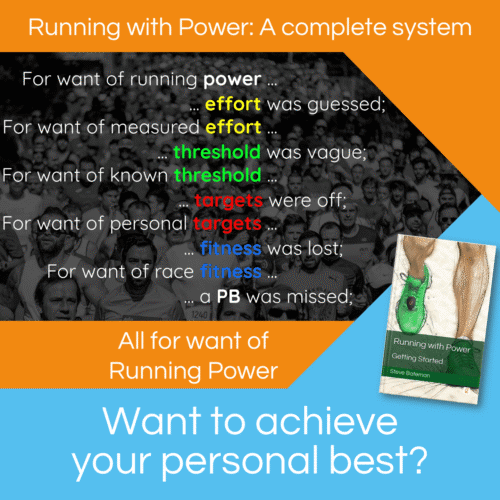
A power rhyme based on 'for want of a nail'

๐†๐ž๐ญ๐ญ๐ข๐ง๐  ๐’๐ญ๐š๐ซ๐ญ๐ž๐

Power is a complete system using effort as its fundamental metric.

So how do you get started?

๐„๐ช๐ฎ๐ข๐ฉ๐ฆ๐ž๐ง๐ญ & ๐€๐ฉ๐ฉ๐ฅ๐ข๐œ๐š๐ญ๐ข๐จ๐ง๐ฌ (๐š๐ฉ๐ฉ๐ฌ)

At a minimum you’ll need a power meter, but there are a few other choices you’ll need to make and the options are not independent.

Making a choice in one area almost always affects another, but the primary choice is your power meter.

๐‡๐จ๐ฐ ๐๐จ ๐ฒ๐จ๐ฎ ๐œ๐ก๐จ๐จ๐ฌ๐ž?

The following are some of the criteria you might consider (each bullet indicates whether the Stryd Footpod ๐Ÿฆถ or wrist-based power ๐Ÿ‘‹ has the advantage)

๐Ÿฆถ Can you use any running watch?

Stryd works with many older watches; Wrist-based power is only found in newer watches.

๐Ÿ‘‹ Do you need to buy a separate power meter?

Wrist-based power meters are built into your running watch; The Stryd footpod is a separate purchase.

๐Ÿฆถ Is it easy to obtain power metrics from supporting apps?

The Stryd ecosystem provides most of the key metrics; Thereโ€™s no ecosystem for wrist-based power (youโ€™ll need multiple apps).

๐Ÿฆถ Has the power meter been independently validated?

There have been at least 10 independent studies validating Strydโ€™s power numbers; Iโ€™m not aware of any independent studies for wrist-based power aside from my own (N=1).

๐Ÿฆถ Can you easily use power on a treadmill, or in GPS-poor areas?

Stryd provides power numbers without needing GPS; Wrist-based watches need GPS to provide power numbers (Garmin is the exception, but is Garmin Power valid on a Treadmill?)

๐‘๐ฎ๐ง๐ง๐ข๐ง๐  ๐ฐ๐ข๐ญ๐ก ๐๐จ๐ฐ๐ž๐ซ โ€“ ๐†๐ž๐ญ๐ญ๐ข๐ง๐  ๐’๐ญ๐š๐ซ๐ญ๐ž๐

The book provides a more complete comparison and detailed information on how to get started with power, using a Stryd footpod or wrist-based power.

๐‘บ๐’‰๐’๐’–๐’๐’…๐’’๐’• ๐’š๐’๐’– ๐’ƒ๐’† ๐‘น๐’–๐’๐’๐’Š๐’๐’ˆ ๐’˜๐’Š๐’•๐’‰ ๐‘ท๐’๐’˜๐’†๐’“?

โ“ Questions?
๐Ÿ“– Getting Started

Getting Started

Racing your personal best

A power rhyme based on 'for want of a nail'

๐‘๐š๐œ๐ข๐ง๐  ๐ฒ๐จ๐ฎ๐ซ ๐ฉ๐ž๐ซ๐ฌ๐จ๐ง๐š๐ฅ ๐›๐ž๐ฌ๐ญ

A truth: power isnโ€™t a guarantee that youโ€™ll run a Personal Best (PB) at every race.

So what does ‘racing your personal best’ mean?

๐๐จ๐ฐ๐ž๐ซ ๐ข๐ฌ ๐ฉ๐ž๐ซ๐ฌ๐จ๐ง๐š๐ฅ

Itโ€™s a system of metrics based on you as you are right now โ€“ your ability, your current fitness, your current form.

Your power metrics are calculated from your completed workouts (for better or worse).

From what youโ€™re able to do.

Right Now.

๐Ÿ‘‰๐Ÿผ Power is Personal.

๐‘๐š๐œ๐ข๐ง๐  ๐ฒ๐จ๐ฎ๐ซ ๐›๐ž๐ฌ๐ญ

If itโ€™s personal to you, how does that translate into racing your best?

Power enables identification of your current running fitness โ€“ your Threshold Power.

๐Ÿ‘‰๐Ÿผ Which means youโ€™re starting from a known position.

It bases your training targets on your Threshold Power, with incremental progressions (in volume or intensity) to improve your fitness while minimising injury risk.

๐Ÿ‘‰๐Ÿผ Which means you can focus on consistently completing planned workouts.

It provides metrics to monitor your changing fitness and your training load, based on your Threshold Power and your completed workouts.

๐Ÿ‘‰๐Ÿผ Which means you can adjust your plan if needed (rather than blindly following it).

It uses your training load metrics to plan your taper (more on that in a future post).

๐Ÿ‘‰๐Ÿผ Which means you minimise missed training and arrive at the start line with fresh legs, ready to run.

It bases your race day power target on your most recent metrics

๐Ÿ‘‰๐Ÿผ Which means youโ€™re running based on you โ€“ your race-day fitness, ability, and form.

Power provides a complete system that prepares you to race your best โ€“ the rest, as they say, is up to you.

๐‘บ๐’‰๐’๐’–๐’๐’…๐’’๐’• ๐’š๐’๐’– ๐’ƒ๐’† ๐‘น๐’–๐’๐’๐’Š๐’๐’ˆ ๐’˜๐’Š๐’•๐’‰ ๐‘ท๐’๐’˜๐’†๐’“?

โ“ Questions?
๐Ÿ“– Getting Started

Racing your personal best

Getting started โฉ

Maximising your training

A power rhyme based on 'for want of a nail'

๐Œ๐š๐ฑ๐ข๐ฆ๐ข๐ฌ๐ข๐ง๐  ๐ฒ๐จ๐ฎ๐ซ ๐ญ๐ซ๐š๐ข๐ง๐ข๐ง๐ 

Your training begins with a goal.

Your goal should translate into a plan for the workouts youโ€™ll run, including target intensities and durations for each.

And then while executing your plan, you should:
๐Ÿ”น monitor your fitness โ€“ to confirm improvements
๐Ÿ”น monitor your training load โ€“ to ensure you maximise training benefits and minimise injury risk

How does power support this approach?

๐–๐จ๐ซ๐ค๐จ๐ฎ๐ญ ๐ญ๐š๐ซ๐ ๐ž๐ญ ๐ข๐ง๐ญ๐ž๐ง๐ฌ๐ข๐ญ๐ข๐ž๐ฌ

Power enables more precise training targets, using targets relative to your Threshold Power โ€“ your current fitness.

Which means:
โœ… power targets are clearer than pace or HR targets โ€“ just โ€˜run to the numbersโ€™
โœ… youโ€™re more likely to target the adaptations needed for your goal race
โœ… as your fitness improves, your targets automatically adjust to match your increased capability

๐Œ๐จ๐ง๐ข๐ญ๐จ๐ซ๐ข๐ง๐  ๐ฒ๐จ๐ฎ๐ซ ๐Ÿ๐ข๐ญ๐ง๐ž๐ฌ๐ฌ

This is as simple as monitoring:
โœ… your Power-Duration Curve โ€“ improvements should move your PDC up, to the right, or both
โœ… your Threshold Power โ€“ which, for many runners, will increase as you get fitter

๐Œ๐จ๐ง๐ข๐ญ๐จ๐ซ๐ข๐ง๐  ๐ฒ๐จ๐ฎ๐ซ ๐ญ๐ซ๐š๐ข๐ง๐ข๐ง๐  ๐ฅ๐จ๐š๐

Power provides three key metrics (based on completed or planned workouts) to monitor your training load:
โœ… Training Load Balance โ€“ indicating whether your training is productive.
โœ… Ramp Rate โ€“ to avoid adding training load too quickly.
โœ… Training Intensity Distribution โ€“ to check that your training intensity mix matches your goal race.

Power provides a complete system for maximising your training.

๐‘บ๐’‰๐’๐’–๐’๐’…๐’’๐’• ๐’š๐’๐’– ๐’ƒ๐’† ๐‘น๐’–๐’๐’๐’Š๐’๐’ˆ ๐’˜๐’Š๐’•๐’‰ ๐‘ท๐’๐’˜๐’†๐’“?

โ“ Questions?
๐Ÿ“– Getting Started

Maximising your training

There’s magic in the numbers

A power rhyme based on 'for want of a nail'

๐“๐ก๐ž๐ซ๐žโ€™๐ฌ ๐ฆ๐š๐ ๐ข๐œ ๐ข๐ง ๐ญ๐ก๐ž ๐ง๐ฎ๐ฆ๐›๐ž๐ซ๐ฌ

โšก Second-by-second as you run, power provides numbers representing your effort.

Whyโ€™s that important?

Once you can measure your effort, you can answer all sorts of questions.

Hereโ€™s a sample โ€ฆ

โ€ฆ ๐ก๐จ๐ฐ ๐Ÿ๐ข๐ญ ๐š๐ฆ ๐ˆ?

Your Threshold Power is a key measure of your current running fitness.

Itโ€™s used to set training targets, to monitor training load, and to set race/event goals.

โ€ฆ ๐š๐ซ๐ž ๐ฆ๐ฒ ๐ญ๐ซ๐š๐ข๐ง๐ข๐ง๐  ๐ญ๐š๐ซ๐ ๐ž๐ญ๐ฌ ๐œ๐จ๐ซ๐ซ๐ž๐œ๐ญ?

Your training targets are based on your Threshold Power (your running fitness) โ€“ what you can achieve right now.

They ensure your targets are โ€˜just rightโ€™ for you, and they self-adjust when your Threshold Power changes.

โ€ฆ ๐ก๐จ๐ฐ ๐ก๐š๐ซ๐ ๐ฐ๐š๐ฌ ๐ญ๐ก๐š๐ญ ๐ฐ๐จ๐ซ๐ค๐จ๐ฎ๐ญ?

Training Load Scores combine โ€˜how hard?โ€™ and โ€˜how long?โ€™ for each completed workout.

They represent the workoutโ€™s metabolic stress โ€“ its impact on your body.

โ€ฆ ๐š๐ฆ ๐ˆ ๐ญ๐ซ๐š๐ข๐ง๐ข๐ง๐  ๐ญ๐จ๐จ ๐ฆ๐ฎ๐œ๐ก? ๐ญ๐จ๐จ ๐ฅ๐ข๐ญ๐ญ๐ฅ๐ž?

Your Training Load Balance, calculated from your Training Load Scores, shows whether your training is โ€˜productiveโ€™ โ€“ not too much, not too little.

โ€ฆ ๐š๐ฆ ๐ˆ ๐ซ๐š๐ฆ๐ฉ๐ข๐ง๐  ๐ฎ๐ฉ ๐ญ๐จ๐จ ๐ช๐ฎ๐ข๐œ๐ค๐ฅ๐ฒ?

Your Ramp Rate, calculated from your Training Load Scores, shows if youโ€™re adding training load too quickly, replacing โ€˜the 10% ruleโ€™ with a metric based on โ€˜how hard?โ€™ and โ€˜how long?โ€™

โ€ฆ ๐ก๐จ๐ฐ ๐ก๐š๐ซ๐ ๐ฌ๐ก๐จ๐ฎ๐ฅ๐ ๐ˆ ๐ซ๐ฎ๐ง ๐จ๐ง ๐ซ๐š๐œ๐ž ๐๐š๐ฒ?

Race-power planning identifies an effort level you can sustain from start to finish, one that will give you the best result youโ€™re capable of.

โ€ฆ ๐ก๐จ๐ฐ ๐œ๐š๐ง ๐ˆ ๐ซ๐ฎ๐ง ๐Ÿ๐š๐ฌ๐ญ๐ž๐ซ?

By working on your form (how you run), you can improve your Running Effectiveness โ€“ how effectively you convert effort into speed.

Running Effectiveness provides an objective way to assess whether form changes are improvements.

All of these metrics are available when Running with Power.

๐‘บ๐’‰๐’๐’–๐’๐’…๐’’๐’• ๐’š๐’๐’– ๐’ƒ๐’† ๐‘น๐’–๐’๐’๐’Š๐’๐’ˆ ๐’˜๐’Š๐’•๐’‰ ๐‘ท๐’๐’˜๐’†๐’“?

โ“ Questions?
๐Ÿ“– Getting Started

There’s magic in the numbers

Power is a complete system

A power rhyme based on 'for want of a nail'

๐๐จ๐ฐ๐ž๐ซ ๐ข๐ฌ ๐š ๐œ๐จ๐ฆ๐ฉ๐ฅ๐ž๐ญ๐ž ๐ฌ๐ฒ๐ฌ๐ญ๐ž๐ฆ

Itโ€™s a system built on your individual capabilities.

And it has five fundamental concepts that work together to enable you to run your personal best.

๐๐จ๐ฐ๐ž๐ซ = ๐„๐Ÿ๐Ÿ๐จ๐ซ๐ญ

Power represents your effort, so you can see how hard you’re working while running and how that changes as you run (whether you decide to make the change, or hills or wind force you to change your effort).

๐“๐ก๐ซ๐ž๐ฌ๐ก๐จ๐ฅ๐ ๐๐จ๐ฐ๐ž๐ซ

Threshold is a small range of effort levels, below which you can run at a steady effort, and above which you fatigue much more quickly and will need to slow down or stop.

Threshold Power is used to set training targets, to monitor training load, and to set race/event goals.

๐๐จ๐ฐ๐ž๐ซ-๐ƒ๐ฎ๐ซ๐š๐ญ๐ข๐จ๐ง

These are inversely related (higher power = shorter duration; lower power = longer duration).

Best effort and maximum effort runs can determine how long you can sustain differing effort levels, giving you a view of your current capability over a range of intensities.

๐“๐ซ๐š๐ข๐ง๐ข๐ง๐  ๐‹๐จ๐š๐

Training Load Scores combine โ€˜how hard?โ€™ and โ€˜how long?โ€™ and represent the training load from each workout โ€“ its impact on your body.

You can combine the scores to calculate metrics you can use to monitor whether your training is productive (not too much, not too little), and to manage injury risk.

๐‘๐ฎ๐ง๐ง๐ข๐ง๐  ๐„๐Ÿ๐Ÿ๐ž๐œ๐ญ๐ข๐ฏ๐ž๐ง๐ž๐ฌ๐ฌ

A speed:power ratio that you can use to estimate finish times, to assess changes to your running form and to evaluate your fatigue resistance.

๐‘บ๐’‰๐’๐’–๐’๐’…๐’’๐’• ๐’š๐’๐’– ๐’ƒ๐’† ๐‘น๐’–๐’๐’๐’Š๐’๐’ˆ ๐’˜๐’Š๐’•๐’‰ ๐‘ท๐’๐’˜๐’†๐’“?

โ“ Questions?
๐Ÿ“– Getting Started

Power is a complete system

Why power? Power can measure running form improvements

A runner looking powerful

๐๐จ๐ฐ๐ž๐ซ ๐œ๐š๐ง ๐ฆ๐ž๐š๐ฌ๐ฎ๐ซ๐ž ๐ซ๐ฎ๐ง๐ง๐ข๐ง๐  ๐Ÿ๐จ๐ซ๐ฆ ๐ข๐ฆ๐ฉ๐ซ๐จ๐ฏ๐ž๐ฆ๐ž๐ง๐ญ๐ฌ

Want to improve your finish times?

You have two choices:
โœ… Work on your fitness โ€“ so you can run the event distance maintaining a higher effort than before
โœ… Work on your form โ€“ so you can run faster for the same effort, run at the same speed for less effort, or both

๐‡๐จ๐ฐ ๐๐จ ๐ฒ๐จ๐ฎ ๐ฐ๐จ๐ซ๐ค ๐จ๐ง ๐ฒ๐จ๐ฎ๐ซ ๐Ÿ๐จ๐ซ๐ฆ?

You can work on your form using drills, plyometrics, strength and conditioning, mobility and other supplemental work.

๐‡๐จ๐ฐ ๐œ๐š๐ง ๐ฒ๐จ๐ฎ ๐ฆ๐ž๐š๐ฌ๐ฎ๐ซ๐ž ๐Ÿ๐จ๐ซ๐ฆ ๐ข๐ฆ๐ฉ๐ซ๐จ๐ฏ๐ž๐ฆ๐ž๐ง๐ญ๐ฌ?

Running Effectiveness (RE) measures how effectively you convert power into forward motion.

Itโ€™s calculated as the ratio of speed to power = speed / power.

RE is a field-based measure similar to, but different from Running Economy (oxygen consumption at various speeds) or Running Efficiency (external mechanical power vs. metabolic power production), which both require lab-based testing.

Measure your RE before beginning your form work, then again at the end, comparing the results to see if youโ€™ve made a positive difference to your Running Effectiveness.

๐‘๐„ ๐œ๐š๐ง ๐›๐ž ๐š ๐๐ข๐Ÿ๐Ÿ๐ข๐œ๐ฎ๐ฅ๐ญ ๐ฆ๐ž๐ญ๐ซ๐ข๐œ ๐ญ๐จ ๐ฆ๐ž๐š๐ฌ๐ฎ๐ซ๐ž

Why?

Itโ€™s affected by: your power meter; your weight; how hard youโ€™re working; hills; wind; running shoes.

One way to track RE improvements is to use reference runs.

Every 3-4 weeks, run the same route at the same target intensities wearing the same running shoes.

Reference runs provide an opportunity to compare RE from one run to the next, so that you can see if you’re improving.

๐‘บ๐’‰๐’๐’–๐’๐’…๐’’๐’• ๐’š๐’๐’– ๐’ƒ๐’† ๐‘น๐’–๐’๐’๐’Š๐’๐’ˆ ๐’˜๐’Š๐’•๐’‰ ๐‘ท๐’๐’˜๐’†๐’“?

โ“ Questions?
๐Ÿ“– Getting Started

Running Effectiveness was proposed by Andrew Coggan, PhD, and measures how effectively you convert power into speed.

Power can measure running form improvements

Why power? Power provides personal best race-day targets

A runner looking powerful

๐๐จ๐ฐ๐ž๐ซ ๐ฉ๐ซ๐จ๐ฏ๐ข๐๐ž๐ฌ ๐ฉ๐ž๐ซ๐ฌ๐จ๐ง๐š๐ฅ ๐›๐ž๐ฌ๐ญ ๐ซ๐š๐œ๐ž-๐๐š๐ฒ ๐ญ๐š๐ซ๐ ๐ž๐ญ๐ฌ

Does this mean a new Personal Best (PB) at every event?

No.

Instead, power can identify race-day targets that you can maintain throughout the event to achieve the best result youโ€™re capable of on the day.

How?

๐“๐ก๐ž ๐’๐ญ๐ซ๐ฒ๐ ๐‘๐š๐œ๐ž ๐‚๐š๐ฅ๐œ๐ฎ๐ฅ๐š๐ญ๐จ๐ซ

The Stryd Race Calculator uses your workouts from the last 90 days, your Auto-CP (Threshold Power) and (optionally) information about the event course and the expected environmental conditions to produce a best-case target power and an estimate of your finish time.

๐’๐ฎ๐ฉ๐ž๐ซ๐๐จ๐ฐ๐ž๐ซ ๐‚๐š๐ฅ๐œ๐ฎ๐ฅ๐š๐ญ๐จ๐ซ (๐’๐๐‚)

Using your Threshold Power, Running Effectiveness (how well you convert effort into forward motion), a fatigue resistance measure specific to your race distance, and (optionally) the expected environmental conditions, SPC provides race power target scenarios, the equivalent percentage of your Threshold Power and estimates of your finish time.

๐”๐ฌ๐ข๐ง๐  ๐ญ๐ก๐ž ๐ซ๐š๐œ๐ž-๐๐š๐ฒ ๐ญ๐š๐ซ๐ ๐ž๐ญ

Power-based targets are a little different than you may be used to.

Theyโ€™re based on you, not on population averages โ€“ ๐‘ฆ๐‘œ๐‘ข๐‘Ÿ current fitness, ๐‘ฆ๐‘œ๐‘ข๐‘Ÿ fatigue resistance, and ๐‘ฆ๐‘œ๐‘ข๐‘Ÿ ability to convert power to speed.

Theyโ€™re a power (or effort) target, not a hopeful goal time โ€“ to quote Steve Palladino โ€œyour time is determined by the power you ๐‘๐‘Ž๐‘› run, not by the power you โ„Ž๐‘œ๐‘๐‘’ to run.โ€

๐‘บ๐’‰๐’๐’–๐’๐’…๐’’๐’• ๐’š๐’๐’– ๐’ƒ๐’† ๐‘น๐’–๐’๐’๐’Š๐’๐’ˆ ๐’˜๐’Š๐’•๐’‰ ๐‘ท๐’๐’˜๐’†๐’“?

โ“ Questions?
๐Ÿ“– Getting Started

Power provides personal best race-day targets

Why power? Power provides metrics to manage your training load

A runner looking powerful

๐๐จ๐ฐ๐ž๐ซ ๐ฉ๐ซ๐จ๐ฏ๐ข๐๐ž๐ฌ ๐ฆ๐ž๐ญ๐ซ๐ข๐œ๐ฌ ๐ญ๐จ ๐ฆ๐š๐ง๐š๐ ๐ž ๐ฒ๐จ๐ฎ๐ซ ๐ญ๐ซ๐š๐ข๐ง๐ข๐ง๐  ๐ฅ๐จ๐š๐

Your training load has two major components:
๐Ÿ”น Your training balance โ€“ balancing the shorter-term and longer-term effects of your training to ensure your training is productive (not too much, not too little)
๐Ÿ”น Your training progression โ€“ managing how you progress your training to avoid injury from adding too much too quickly.

Power provides metrics, based on your completed workouts, to manage your training load.

๐‡๐จ๐ฐ ๐๐จ๐ž๐ฌ ๐ฉ๐จ๐ฐ๐ž๐ซ ๐ฎ๐ฌ๐ž ๐œ๐จ๐ฆ๐ฉ๐ฅ๐ž๐ญ๐ž๐ ๐ฐ๐จ๐ซ๐ค๐จ๐ฎ๐ญ๐ฌ ๐ญ๐จ ๐š๐œ๐ก๐ข๐ž๐ฏ๐ž ๐ญ๐ก๐ข๐ฌ?

Power calculates a Stress Score for every workout, using the workout intensities and durations.

It uses the Stress Scores from every workout, along with your Threshold Power, to calculate training load metrics.

These metrics will be covered in more detail in an upcoming series of posts.

๐–๐ก๐ฒ ๐ข๐ฌ ๐ข๐ญ ๐ข๐ฆ๐ฉ๐จ๐ซ๐ญ๐š๐ง๐ญ ๐ญ๐จ ๐ฆ๐š๐ง๐š๐ ๐ž ๐›๐จ๐ญ๐ก ๐›๐š๐ฅ๐š๐ง๐œ๐ž ๐š๐ง๐ ๐ฉ๐ซ๐จ๐ ๐ซ๐ž๐ฌ๐ฌ๐ข๐จ๐ง?

Training stresses your body, prompting it to adapt and become fitter, improving performance.

But it’s a balance.

Stress the body too little, and it wonโ€™t adapt.

Stress it too much or progress too quickly, and itโ€™ll break down instead of adapting.

Stress the body correctly, managing both balance and progression, and sustained long-term improvements are possible.

๐‘บ๐’‰๐’๐’–๐’๐’…๐’’๐’• ๐’š๐’๐’– ๐’ƒ๐’† ๐‘น๐’–๐’๐’๐’Š๐’๐’ˆ ๐’˜๐’Š๐’•๐’‰ ๐‘ท๐’๐’˜๐’†๐’“?

โ“ Questions?
๐Ÿ“– Getting Started

Power provides metrics to manage your training load

Why power? Power targets are clearer than pace or HR targets

A runner looking powerful

๐๐จ๐ฐ๐ž๐ซ ๐ญ๐š๐ซ๐ ๐ž๐ญ๐ฌ ๐š๐ซ๐ž ๐œ๐ฅ๐ž๐š๐ซ๐ž๐ซ ๐ญ๐ก๐š๐ง ๐ฉ๐š๐œ๐ž ๐จ๐ซ ๐ก๐ž๐š๐ซ๐ญ ๐ซ๐š๐ญ๐ž ๐ญ๐š๐ซ๐ ๐ž๐ญ๐ฌ

Which is clearer?
1. โ€œ3x 15min at 15 secs/mile slower than 10k pace with 3min easy recoveryโ€
2. โ€œ3x 15min zone 3 with 3min zone 2 recovery between setsโ€
3. โ€œ3x 15min at 220W – 230W with 3min recovery below 200Wโ€

You may think theyโ€™re all clear, but โ€ฆ

๐๐š๐œ๐ž ๐ญ๐š๐ซ๐ ๐ž๐ญ ๐ข๐ฌ๐ฌ๐ฎ๐ž๐ฌ

How fast is 10k pace? I didnโ€™t know my 10k pace when I first started running.

Does 15 secs/mile apply to all runners, regardless of their 10k pace? Probably not.

And should you maintain the pace on the flat and on hills? With no variation?

๐‡๐ž๐š๐ซ๐ญ ๐ซ๐š๐ญ๐ž ๐ญ๐š๐ซ๐ ๐ž๐ญ ๐ข๐ฌ๐ฌ๐ฎ๐ž๐ฌ

Thereโ€™s no easy way to discover your maxHR. Either itโ€™s based on your age (rather than your individual capability), or it requires an all-out 3-minute run to try to reach your maxHR.

HR target zones tend to be quite wide โ€“ 10% โ€˜chunksโ€™ (a broad brush).

And heart rate lags behind changes in your effort, and drifts up at the end of longer runs.

๐๐จ๐ฐ๐ž๐ซ ๐ข๐ฌ ๐๐ข๐Ÿ๐Ÿ๐ž๐ซ๐ž๐ง๐ญ

Power gets your training targets right โ€“ individualised to you and your current running fitness, and as a narrower range within training zones.

When running, just keep your lap power within the target range โ€“ on the flat or on hills.

And power responds to changes in effort โ€“ no lags and no drifting.

๐‘บ๐’‰๐’๐’–๐’๐’…๐’’๐’• ๐’š๐’๐’– ๐’ƒ๐’† ๐‘น๐’–๐’๐’๐’Š๐’๐’ˆ ๐’˜๐’Š๐’•๐’‰ ๐‘ท๐’๐’˜๐’†๐’“?

โ“ Questions?
๐Ÿ“– Getting Started

Power targets are clearer than pace or HR targets