Races and Events – Ready, set, go!

Picture of runners waiting to start an event

๐‘๐š๐œ๐ž๐ฌ ๐š๐ง๐ ๐„๐ฏ๐ž๐ง๐ญ๐ฌ โ€“ ๐‘๐ž๐š๐๐ฒ, ๐ฌ๐ž๐ญ, ๐ ๐จ!

Youโ€™ve trained, youโ€™ve tapered, and the event is just about here.

Using power, whatโ€™s important?
โŒš Your watch setup, so that you donโ€™t get distracted during the event
๐Ÿชซ Your equipment, so that itโ€™s fully charged
โšก Your warm-up, so that youโ€™re primed for the event

๐–๐š๐ญ๐œ๐ก ๐ฌ๐ž๐ญ๐ฎ๐ฉ

Iโ€™ve arrived at a โ€˜less is moreโ€™ philosophy.

It took a few years, but gradually, Iโ€™ve come to trust power (and power metrics) and chosen the few metrics I want showing on my watch.

Iโ€™d recommend setting up your watch to:
โœ… auto-lap every mile or kilometre (your preference) to reset lap average power
โœ… show lap and 3s average power (or real-time power if 3s average isnโ€™t an option)
โœ… include last lap power if you have it, so that you donโ€™t need to glance down every auto-lap

Resist the temptation to include elapsed time, time of day, pace or heart rate, as these may distract you from maintaining your power target.

๐‚๐ก๐š๐ซ๐ ๐ž ๐ฒ๐จ๐ฎ๐ซ ๐ž๐ช๐ฎ๐ข๐ฉ๐ฆ๐ž๐ง๐ญ

A simple reminder โ€“ to avoid flat batteries part-way through the event.

๐–๐š๐ซ๐ฆ-๐ฎ๐ฉ / ๐ฉ๐ซ๐ข๐ฆ๐ข๐ง๐ 

Your warm-up should include mobilisation and dynamic stretching and 5-10 minutes of jogging โ€“ no different than if you were using pace or heart rate.

Then run some short intervals at just below Threshold Power, just above Threshold Power and finish with some strides or short sprints. This will prime your different energy systems โ€“ with power, you can ensure your intervals are at the correct intensities.

Ideally, prime the day before the event and during the 1-2 hours before your start time, so that you donโ€™t start the event feeling sluggish.

๐‘บ๐’‰๐’๐’–๐’๐’…๐’’๐’• ๐’š๐’๐’– ๐’ƒ๐’† ๐‘น๐’–๐’๐’๐’Š๐’๐’ˆ ๐’˜๐’Š๐’•๐’‰ ๐‘ท๐’๐’˜๐’†๐’“?

โ“ Questions?
๐Ÿ“– Getting Started

Races & Events – Ready, set, go!

Races and Events – Tapering

Picture of runners waiting to start an event

๐‘๐š๐œ๐ž๐ฌ & ๐„๐ฏ๐ž๐ง๐ญ๐ฌ โ€“ ๐“๐š๐ฉ๐ž๐ซ๐ข๐ง๐ 

Tapering aims to achieve a controlled reduction in your training so that your body has time to recover from training fatigue without losing too much fitness.

It aims to deliver you to the start line with maximum fitness and ‘on fresh legs’.

Itโ€™s a balance. Start the taper too soon, and youโ€™ll miss out on training; too late, youโ€™ll arrive with tired or heavy legs.

๐๐ฅ๐š๐ง๐ง๐ข๐ง๐  ๐ฒ๐จ๐ฎ๐ซ ๐ญ๐š๐ฉ๐ž๐ซ

Tapering uses two metrics:
โœ… Your Stress Balance. As you approach your event, you can plan your workouts so that your Stress Balance becomes more positive.
โœ… Your Ramp Rate. As you approach your event, you can plan your workouts so that your Ramp Rate becomes less positive.

Both metrics use planned numbers based on your upcoming workouts to โ€˜look aheadโ€™ at the numbers that will be in place on the event date.

๐–๐ก๐š๐ญ ๐ฌ๐ก๐จ๐ฎ๐ฅ๐ ๐ฒ๐จ๐ฎ ๐ฎ๐ฌ๐ž ๐š๐ฌ ๐ญ๐š๐ซ๐ ๐ž๐ญ๐ฌ?

This depends on the event duration (shorter events usually need a shorter taper) and how the event factors into your longer-term plans:
๐ŸŽฏ If itโ€™s the event youโ€™ve been training for, you might aim for a positive training balance and a negative ramp rate, ‘giving up’ some training leading up to the event.
๐ŸŽฏ If itโ€™s an event youโ€™re using to test fitness or race-day strategy, you might aim for a training balance around zero but maintain a positive ramp rate, scaling back your training but not giving up too much.

There are many other things you should also consider when tapering, but using your training load metrics provides a solid foundation.

๐‘บ๐’‰๐’๐’–๐’๐’…๐’’๐’• ๐’š๐’๐’– ๐’ƒ๐’† ๐‘น๐’–๐’๐’๐’Š๐’๐’ˆ ๐’˜๐’Š๐’•๐’‰ ๐‘ท๐’๐’˜๐’†๐’“?

โ“ Questions?
๐Ÿ“– Getting Started

Races & Events – Tapering

Races and Events – Race Targets

Picture of runners waiting to start an event

๐‘๐š๐œ๐ž๐ฌ & ๐„๐ฏ๐ž๐ง๐ญ๐ฌ โ€“ ๐‘๐š๐œ๐ž ๐“๐š๐ซ๐ ๐ž๐ญ๐ฌ

If youโ€™re like I was (before power), your race target is a goal time: โ€œIโ€™d love to break 1 hour for the 10kโ€, or โ€œโ€ฆ 2 hours for a halfโ€.

You may have used online calculators to put in a 5k time (or an 800m time) to see what your equivalent 10k or half time would be.

And then when you ran the event, you struggled to achieve the predicted time โ€ฆ because it was more โ€˜hopefulโ€™ than a prediction, based on using a single data point with data averaged across thousands of runners, many of whom are nothing like you.

๐๐จ๐ฐ๐ž๐ซ ๐ญ๐š๐ซ๐ ๐ž๐ญ๐ฌ ๐š๐ซ๐ž ๐๐ข๐Ÿ๐Ÿ๐ž๐ซ๐ž๐ง๐ญ

Event targets when running with power are based on:
โœ… your current running fitness
โœ… your measured fatigue resistance (or stamina)
โœ… your proven ability to convert effort into forward motion

All three (metrics) are based on your completed workouts and are individual to you.

๐‡๐จ๐ฐ ๐š๐ซ๐ž ๐ซ๐š๐œ๐ž ๐ญ๐š๐ซ๐ ๐ž๐ญ๐ฌ ๐œ๐š๐ฅ๐œ๐ฎ๐ฅ๐š๐ญ๐ž๐?

If you use a Stryd footpod, you have access to the Stryd Race Power Calculator. The calculator will prompt you for the information needed for the calculation.

If you donโ€™t use a Stryd footpod (or even if you do), you also have access to SuperPower Calculator for Sheets (SPCs). Steve Palladino has recorded several videos showing how to use SPCs to calculate race scenarios.

๐๐จ ๐ฆ๐จ๐ซ๐ž ‘๐ก๐จ๐ฉ๐ž๐Ÿ๐ฎ๐ฅ’ ๐ ๐จ๐š๐ฅ ๐ญ๐ข๐ฆ๐ž๐ฌ

Race power targets represent the effort you should be able to maintain for the entire event. The calculators can also provide an estimated finish time, but this is an estimation โ€“ instead, run to effort โ€ฆ and let the time take care of itself.

๐‘บ๐’‰๐’๐’–๐’๐’…๐’’๐’• ๐’š๐’๐’– ๐’ƒ๐’† ๐‘น๐’–๐’๐’๐’Š๐’๐’ˆ ๐’˜๐’Š๐’•๐’‰ ๐‘ท๐’๐’˜๐’†๐’“?

โ“ Questions?
๐Ÿ“– Getting Started

More about the Race Calculators can be found at:
๐Ÿ”น Stryd: Race Power Calculator in PowerCenter
๐Ÿ”น SuperPower Calculator for Sheets (click to download a copy)
Steve Palladino’s videos are on YouTube

Races & Events – Race Targets

Races and Events – with Power

Picture of runners waiting to start an event

๐‘๐š๐œ๐ž๐ฌ & ๐„๐ฏ๐ž๐ง๐ญ๐ฌ โ€“ ๐ฐ๐ข๐ญ๐ก ๐๐จ๐ฐ๐ž๐ซ

Races & Events are a little different when Running with Power.

The next few posts will dig into the detail, but in summary (and as a taster):
โšก Your race-day power target is based on your fitness and capabilities
โšก Tapering uses power-based metrics to determine when and how to taper
โšก On the day, your target is your target for the entire event (no adjustments needed)
โšก You wonโ€™t be able to (or need to) run with pacers
โšก Youโ€™ll run to power, to achieve your personal best on the day

This is quite different than:
โŒ looking up a hopeful goal time from a table compiled using data from thousands of runners (many of whom are nothing like you)
โŒ tapering for a period and approach determined using general guidelines
โŒ wearing a wrist band telling you your pace (per mile or kilometre) based on whether the section is uphill, downhill or flat
โŒ going out too fast and suffering the consequences later in the event
โŒ trying to keep up with pacers to achieve your hopeful goal time

It takes a little getting used to.

Especially the part about running to a power target rather than a (hopeful) goal time.

But this effort-based approach has been proven hundreds of times and has produced many unexpected personal bests.

๐‘บ๐’‰๐’๐’–๐’๐’…๐’’๐’• ๐’š๐’๐’– ๐’ƒ๐’† ๐‘น๐’–๐’๐’๐’Š๐’๐’ˆ ๐’˜๐’Š๐’•๐’‰ ๐‘ท๐’๐’˜๐’†๐’“?

โ“ Questions?
๐Ÿ“– Getting Started

Racing & Events – with Power

Power Apps – point solutions

Power apps - calculating metrics

๐๐จ๐ฐ๐ž๐ซ ๐€๐ฉ๐ฉ๐ฌ โ€“ ๐ฉ๐จ๐ข๐ง๐ญ ๐ฌ๐จ๐ฅ๐ฎ๐ญ๐ข๐จ๐ง๐ฌ

Power is still relatively new for runners. And while there are some apps that cover most of the important metrics, you may find that you need additional apps to plug the gaps.

Here are a few apps that can fill those gaps.

๐”๐ฌ๐ข๐ง๐  ๐€๐ฉ๐ฉ๐ฅ๐ž ๐ฐ๐ซ๐ข๐ฌ๐ญ-๐›๐š๐ฌ๐ž๐ ๐ฉ๐จ๐ฐ๐ž๐ซ

Apple Health doesnโ€™t provide any of the important metrics.

Which means youโ€™ll need to transfer your workout data from Apple Health into an app that can provide these, like WKO or Intervals.icu.

There are a few apps that will do this. Iโ€™ve successfully used HealthFit; other options are RunGap or Health Sync.

๐‘๐ฎ๐ง๐ง๐ข๐ง๐  ๐„๐Ÿ๐Ÿ๐ž๐œ๐ญ๐ข๐ฏ๐ž๐ง๐ž๐ฌ๐ฌ (๐‘๐„)

The only app to provide this (natively) is WKO.

If youโ€™re a Stryd user, or if youโ€™re using Intervals.icu, youโ€™ll need to calculate RE manually or use SuperPower Calculator for Sheets (SPCs).

Steve Palladinoโ€™s video โ€˜Running Effectiveness and the SuperPower Calculatorโ€™ demonstrates how to use SPCs to calculate RE for a workout or a workout section.

๐Ž๐ญ๐ก๐ž๐ซ ๐š๐ฉ๐ฉ๐ฌ

โ€˜Getting Startedโ€™ covers other apps that can calculate power metrics, while the bookโ€™s online content provides a more complete comparison of Power Apps.

๐‘บ๐’‰๐’๐’–๐’๐’…๐’’๐’• ๐’š๐’๐’– ๐’ƒ๐’† ๐‘น๐’–๐’๐’๐’Š๐’๐’ˆ ๐’˜๐’Š๐’•๐’‰ ๐‘ท๐’๐’˜๐’†๐’“?

โ“ Questions?
๐Ÿ“– Getting Started

โช Intervals.icu

point solutions

Power Apps – Intervals.icu

Power apps - calculating metrics

๐๐จ๐ฐ๐ž๐ซ ๐€๐ฉ๐ฉ๐ฌ โ€“ ๐ˆ๐ง๐ญ๐ž๐ซ๐ฏ๐š๐ฅ๐ฌ.๐ข๐œ๐ฎ

Intervals.icu analyses your rides, runs, swims and other activities (with and without power). It provides basic and advanced analytics and planning in an easy-to-use web interface with support for desktops, phones, and tablets. Intervals.icu is free to use, with additional features should you choose to subscribe.

It can calculate and display all the most important metrics โ€ฆ and then some.

๐ˆ๐ง๐ญ๐ž๐ซ๐ฏ๐š๐ฅ๐ฌ.๐ข๐œ๐ฎ ๐Œ๐ž๐ญ๐ซ๐ข๐œ๐ฌ

โœ… Threshold Power. Intervals.icu can calculate threshold power (using your choice from several models) based on the last 90 days of completed workouts or using a custom date range.

โœ… Stress Score. Intervals.icu uses the term โ€˜Training Stress Scoreโ€™ (TSS) and can calculate a power-based TSS for each completed workout.

โœ… Stress Balance. Intervals.icu uses the term โ€˜Formโ€™ to show the balance between โ€˜Fitnessโ€™ and โ€˜Fatigueโ€™.

โœ… Ramp Rate. Intervals.icu shows your week-on-week Ramp Rate (RR), overlaid onto the same chart as fitness, fatigue and form.

โœ… Running Effectiveness. Intervals.icu doesnโ€™t calculate Running Effectiveness, although you can manually calculate this using the detailed workout review pages, or by adding a custom calculation.

๐–๐ก๐ฒ ๐ฎ๐ฌ๐ž ๐ˆ๐ง๐ญ๐ž๐ซ๐ฏ๐š๐ฅ๐ฌ.๐ข๐œ๐ฎ?

If youโ€™re not using the Stryd ecosystem or TrainingPeaks/WKO, Intervals.icu is a great way to track your power metrics.

โ€˜Getting Startedโ€™ covers other apps that can calculate power metrics, while the bookโ€™s online content provides a more complete comparison of Intervals.icu vs. other Power Apps.

๐‘บ๐’‰๐’๐’–๐’๐’…๐’’๐’• ๐’š๐’๐’– ๐’ƒ๐’† ๐‘น๐’–๐’๐’๐’Š๐’๐’ˆ ๐’˜๐’Š๐’•๐’‰ ๐‘ท๐’๐’˜๐’†๐’“?

โ“ Questions?
๐Ÿ“– Getting Started

โช WKO

Intervals.icu

point solutions โฉ

Power Apps – WKO

Power apps - calculating metrics

๐๐จ๐ฐ๐ž๐ซ ๐€๐ฉ๐ฉ๐ฌ โ€“ ๐–๐Š๐Ž

The WKO app is an analysis and charting tool that runs under MS Windows or on a Mac and provides a wide range of charts and graphs of your power data.

It can calculate and display all the most important metrics โ€ฆ and then some.

๐–๐Š๐Ž ๐Œ๐ž๐ญ๐ซ๐ข๐œ๐ฌ

โœ… Threshold Power. WKO uses the term โ€˜Functional Threshold Powerโ€™ (FTP) and offers an automatically calculated FTP, as well as the option to manually record your FTP history (and use it in charts).

โœ… Stress Score. WKO uses the term โ€˜Training Stress Scoreโ€™ (TSS).

โœ… Stress Balance. WKO uses the term โ€˜Training Stress Balanceโ€™ (TSB).

โœ… Ramp Rate. WKO can chart your week-on-week Ramp Rate (RR).

โœ… Running Effectiveness. WKO can show your Running Effectiveness (RE) for an entire workout or just for part of a workout (e.g. an interval).

๐–๐ก๐ฒ ๐ฎ๐ฌ๐ž ๐–๐Š๐Ž?

WKO comes with hundreds of pre-configured charts. You can also build your own charts and calculated metrics using a powerful charting language. WKO integrates seamlessly with TrainingPeaks, syncing planned and completed workout data and a range of health metrics.

โ€˜Getting Startedโ€™ covers other apps that can calculate power metrics, while the bookโ€™s online content provides a more complete comparison of WKO vs. other Power Apps.

๐‘บ๐’‰๐’๐’–๐’๐’…๐’’๐’• ๐’š๐’๐’– ๐’ƒ๐’† ๐‘น๐’–๐’๐’๐’Š๐’๐’ˆ ๐’˜๐’Š๐’•๐’‰ ๐‘ท๐’๐’˜๐’†๐’“?

โ“ Questions?
๐Ÿ“– Getting Started

Power Apps – Stryd PowerCenter / Stryd Mobile

Power apps - calculating metrics

๐๐จ๐ฐ๐ž๐ซ ๐€๐ฉ๐ฉ๐ฌ โ€“ ๐’๐ญ๐ซ๐ฒ๐ ๐๐จ๐ฐ๐ž๐ซ๐‚๐ž๐ง๐ญ๐ž๐ซ / ๐’๐ญ๐ซ๐ฒ๐ ๐Œ๐จ๐›๐ข๐ฅ๐ž

The Stryd PowerCenter / Mobile app is available to anyone using a Stryd footpod (most features are free, some need a subscription).

It calculates and displays some (but not all) of the most important metrics.

๐’๐ญ๐ซ๐ฒ๐ ๐Œ๐ž๐ญ๐ซ๐ข๐œ๐ฌ

In the following, the term โ€˜Strydโ€™ includes Stryd PowerCenter and Stryd Mobile

โœ… Threshold Power. Stryd uses the term โ€˜Critical Powerโ€™ (CP) and offers an automatically calculated CP (Auto-CP) as well as a manually-set CP (using various protocols).

โœ… Stress Score. Stryd uses the term โ€˜Running Stress Scoreโ€™ (RSS) and offers a unique calculation which includes a term representing the additional biomechanical stress put on your body from running (vs. cycling).

โœ… Stress Balance. Stryd uses the term โ€˜Running Stress Balanceโ€™ (RSB) and offers guidance for how to interpret your RSB.

โŒ Ramp Rate. Stryd does not show your Ramp Rate (RR). Youโ€™ll need to calculate RR manually using Strydโ€™s 42d Avg (in Stryd Mobile) or use another system to track this.

โŒ Running Effectiveness. Stryd does not show your Running Effectiveness (RE). Youโ€™ll need to calculate RE manually using another system, or use one of Stryd’s alternate metrics – for example Form Power, Leg Spring Stiffness, Impact Loading Rate.

๐–๐ก๐ฒ ๐ฎ๐ฌ๐ž ๐’๐ญ๐ซ๐ฒ๐ ๐๐จ๐ฐ๐ž๐ซ๐‚๐ž๐ง๐ญ๐ซ๐ž / ๐Œ๐จ๐›๐ข๐ฅ๐ž?

The Stryd ecosystem is probably the most power-friendly app at the moment, designed with power in mind, and aimed at runners who are getting started with power.

โ€˜Getting Startedโ€™ covers systems that can calculate the missing metrics, while the bookโ€™s online content provides a more complete comparison of Stryd vs. other Power Apps.

๐‘บ๐’‰๐’๐’–๐’๐’…๐’’๐’• ๐’š๐’๐’– ๐’ƒ๐’† ๐‘น๐’–๐’๐’๐’Š๐’๐’ˆ ๐’˜๐’Š๐’•๐’‰ ๐‘ท๐’๐’˜๐’†๐’“?

โ“ Questions?
๐Ÿ“– Getting Started

โช Choosing Power Apps

Stryd PowerCenter / Stryd Mobile

WKO โฉ

Choosing Power Apps

Power apps - calculating metrics

๐‚๐ก๐จ๐จ๐ฌ๐ข๐ง๐  ๐ฉ๐จ๐ฐ๐ž๐ซ ๐š๐ฉ๐ฉ๐ฌ

Power is a complete system using effort as its fundamental metric.

Power uses your second-by-second effort from completed workouts to calculate metrics that build a detailed picture of your individual running capabilities.

Imagine you run 3 times per week for around an hour each time. Thatโ€™s 60 pieces of data per minute, 3600 per hour and over 3 runs, over 10,000 pieces of data. Thatโ€™s a lot of data!

Which is why power relies on power-aware applications (โ€˜appsโ€™) to calculate your metrics.

๐‚๐š๐ง ๐ฒ๐จ๐ฎ ๐ฎ๐ฌ๐ž ๐š๐ง๐ฒ ๐š๐ฉ๐ฉ?

The choice is yours, but some apps are more power-aware than others, with the best apps able to calculate the most important metrics.

๐–๐ก๐ข๐œ๐ก ๐ฆ๐ž๐ญ๐ซ๐ข๐œ๐ฌ ๐š๐ซ๐ž ๐ฆ๐จ๐ฌ๐ญ ๐ข๐ฆ๐ฉ๐จ๐ซ๐ญ๐š๐ง๐ญ?

โœ… Threshold Power. Represents your current running fitness.

โœ… Stress Score. A score (per workout) that combines โ€˜how hard?โ€™ and โ€˜how long?โ€™ to represent the workoutโ€™s metabolic stress โ€“ its impact on your body.

โœ… Stress Balance. Indicates whether your training is โ€˜productiveโ€™  โ€“ enough stress to encourage adaptations, but not so much that there is a greater risk of injury or over-training.

โœ… Ramp Rate. Replaces โ€˜the 10% ruleโ€™ with a metric based on your training volume and intensity, to monitor whether youโ€™re adding training load too quickly.

โœ… Running Effectiveness. Measures how effectively you convert power into speed, used to estimate finish times, to assess changes to your running form and to evaluate your fatigue resistance.

There are other criteria that will influence your choice of apps, but being able to obtain these metrics may be the most important.

๐‘บ๐’‰๐’๐’–๐’๐’…๐’’๐’• ๐’š๐’๐’– ๐’ƒ๐’† ๐‘น๐’–๐’๐’๐’Š๐’๐’ˆ ๐’˜๐’Š๐’•๐’‰ ๐‘ท๐’๐’˜๐’†๐’“?

โ“ Questions?
๐Ÿ“– Getting Started

Choosing Power Apps

Getting Started

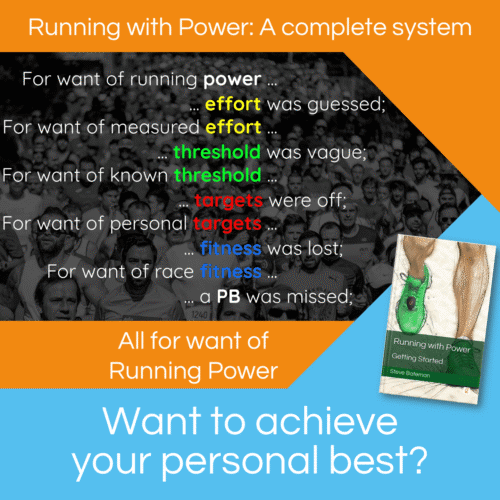
A power rhyme based on 'for want of a nail'

๐†๐ž๐ญ๐ญ๐ข๐ง๐  ๐’๐ญ๐š๐ซ๐ญ๐ž๐

Power is a complete system using effort as its fundamental metric.

So how do you get started?

๐„๐ช๐ฎ๐ข๐ฉ๐ฆ๐ž๐ง๐ญ & ๐€๐ฉ๐ฉ๐ฅ๐ข๐œ๐š๐ญ๐ข๐จ๐ง๐ฌ (๐š๐ฉ๐ฉ๐ฌ)

At a minimum you’ll need a power meter, but there are a few other choices you’ll need to make and the options are not independent.

Making a choice in one area almost always affects another, but the primary choice is your power meter.

๐‡๐จ๐ฐ ๐๐จ ๐ฒ๐จ๐ฎ ๐œ๐ก๐จ๐จ๐ฌ๐ž?

The following are some of the criteria you might consider (each bullet indicates whether the Stryd Footpod ๐Ÿฆถ or wrist-based power ๐Ÿ‘‹ has the advantage)

๐Ÿฆถ Can you use any running watch?

Stryd works with many older watches; Wrist-based power is only found in newer watches.

๐Ÿ‘‹ Do you need to buy a separate power meter?

Wrist-based power meters are built into your running watch; The Stryd footpod is a separate purchase.

๐Ÿฆถ Is it easy to obtain power metrics from supporting apps?

The Stryd ecosystem provides most of the key metrics; Thereโ€™s no ecosystem for wrist-based power (youโ€™ll need multiple apps).

๐Ÿฆถ Has the power meter been independently validated?

There have been at least 10 independent studies validating Strydโ€™s power numbers; Iโ€™m not aware of any independent studies for wrist-based power aside from my own (N=1).

๐Ÿฆถ Can you easily use power on a treadmill, or in GPS-poor areas?

Stryd provides power numbers without needing GPS; Wrist-based watches need GPS to provide power numbers (Garmin is the exception, but is Garmin Power valid on a Treadmill?)

๐‘๐ฎ๐ง๐ง๐ข๐ง๐  ๐ฐ๐ข๐ญ๐ก ๐๐จ๐ฐ๐ž๐ซ โ€“ ๐†๐ž๐ญ๐ญ๐ข๐ง๐  ๐’๐ญ๐š๐ซ๐ญ๐ž๐

The book provides a more complete comparison and detailed information on how to get started with power, using a Stryd footpod or wrist-based power.

๐‘บ๐’‰๐’๐’–๐’๐’…๐’’๐’• ๐’š๐’๐’– ๐’ƒ๐’† ๐‘น๐’–๐’๐’๐’Š๐’๐’ˆ ๐’˜๐’Š๐’•๐’‰ ๐‘ท๐’๐’˜๐’†๐’“?

โ“ Questions?
๐Ÿ“– Getting Started

Getting Started