Is power just for elite runners?

A runner 'Running with Power'

๐ˆ๐ฌ ๐ฉ๐จ๐ฐ๐ž๐ซ ๐ฃ๐ฎ๐ฌ๐ญ ๐Ÿ๐จ๐ซ ๐ž๐ฅ๐ข๐ญ๐ž ๐ซ๐ฎ๐ง๐ง๐ž๐ซ๐ฌ?

No.

In fact, non-elites may benefit more from power than elite runners.

Why?

Running power provides numbers that represent your effort – how hard you’re working when you’re running.

Elite runners have usually spent years training and competing.

Which means theyโ€™ve developed a very good feel for how hard theyโ€™re working when they run, and how long they can maintain race-winning efforts.

They have a well-developed ๐‘ ๐‘ข๐‘๐‘—๐‘’๐‘๐‘ก๐‘–๐‘ฃ๐‘’ feel for their effort.

Power provides an ๐‘œ๐‘๐‘—๐‘’๐‘๐‘ก๐‘–๐‘ฃ๐‘’ measurement of effort that, while useful for elite runners wanting to fine-tune their running, may not provide an enormous benefit.

๐’๐จ, ๐ฉ๐จ๐ฐ๐ž๐ซ ๐ข๐ฌ ๐Ÿ๐จ๐ซ ๐ง๐จ๐ง-๐ž๐ฅ๐ข๐ญ๐ž ๐ซ๐ฎ๐ง๐ง๐ž๐ซ๐ฌ?

โšก Any runner can use power, but non-elite runners may get the biggest benefits.

Benefits like:
โœ… maintaining a consistent effort over hills or in windy conditions
โœ… using the instant feedback from power for precise interval training
โœ… minimising injury risk by monitoring accumulated training load from completed workouts
โœ… assessing whether drills or form adjustments are improving their ability to convert effort into speed
โœ… using power to train your feel for when you’re running too hard or too easy

As one runner commented, “I honestly think it helps weaker/slower/newer runners even more than experienced fast runners. Itโ€™s like having a coach in a pod!”

๐‘บ๐’‰๐’๐’–๐’๐’…๐’’๐’• ๐’š๐’๐’– ๐’ƒ๐’† ๐‘น๐’–๐’๐’๐’Š๐’๐’ˆ ๐’˜๐’Š๐’•๐’‰ ๐‘ท๐’๐’˜๐’†๐’“?

โ“ Questions?
๐Ÿ“— Get Started

๐“๐จ๐ฉ๐ข๐œ: ๐๐จ๐ฐ๐ž๐ซ=๐„๐Ÿ๐Ÿ๐จ๐ซ๐ญ
โฉ What is power?
โฉ Does Power measure effort?
โฉ Is Power better than Pace, or HR?
โฉ Is Power just for elite runners?
โฉ How do I start Running with Power?

Is Power better than Pace or Heart Rate?

A runner 'Running with Power'

๐ˆ๐ฌ ๐ฉ๐จ๐ฐ๐ž๐ซ ๐›๐ž๐ญ๐ญ๐ž๐ซ ๐ญ๐ก๐š๐ง ๐ฉ๐š๐œ๐ž, ๐จ๐ซ ๐ก๐ž๐š๐ซ๐ญ ๐ซ๐š๐ญ๐ž?

It dependsโ€ฆ

Running power provides second-by-second numbers that ๐‘Ÿ๐‘’๐‘๐‘Ÿ๐‘’๐‘ ๐‘’๐‘›๐‘ก your effort – your running intensity.

By doing this, power solves issues associated with other measures of intensity:
๐Ÿ”ธ Heart Rate (HR) โ€˜lagsโ€™ when you change effort levels, and it can โ€˜driftโ€™ on longer runs.
๐Ÿ”ธ Pace is affected by hilly or windy conditions, and itโ€™s very easy to choose a goal time that isn’t based on your current fitness โ€“ leading to training injuries and bonking or ‘hitting the wall’.
๐Ÿ”ธ Perceived effort can take years to develop โ€“ a luxury most recreational runners donโ€™t have.

That said, there are a few things that are different about running with power:
๐Ÿ”น Itโ€™s individual โ€“ your targets are based on what you can do right now.
๐Ÿ”น It includes maximum effort runs โ€“ to track your current fitness.
๐Ÿ”น Youโ€™ll need apps โ€“ to calculate consolidated metrics.
๐Ÿ”น Itโ€™s new, and the concepts and supporting apps aren’t always easy to use.

๐ˆ๐ฌ ๐ข๐ญ ๐›๐ž๐ญ๐ญ๐ž๐ซ?

Like any new approach, there are some things that take some getting used to.

However …

โšก After running and coaching with power since 2018, I think itโ€™s the most effective way to train and race.

๐‘บ๐’‰๐’๐’–๐’๐’…๐’’๐’• ๐’š๐’๐’– ๐’ƒ๐’† ๐‘น๐’–๐’๐’๐’Š๐’๐’ˆ ๐’˜๐’Š๐’•๐’‰ ๐‘ท๐’๐’˜๐’†๐’“?

โ“ Questions?
๐Ÿ“— Get Started

๐“๐จ๐ฉ๐ข๐œ: ๐๐จ๐ฐ๐ž๐ซ=๐„๐Ÿ๐Ÿ๐จ๐ซ๐ญ
โฉ What is power?
โฉ Does Power measure effort?
โฉ Is Power better than Pace, or HR?
โฉ Is Power just for elite runners?
โฉ How do I start Running with Power?

Does running power really measure your effort?

A runner 'Running with Power'

๐ƒ๐จ๐ž๐ฌ ๐ซ๐ฎ๐ง๐ง๐ข๐ง๐  ๐ฉ๐จ๐ฐ๐ž๐ซ ๐ซ๐ž๐š๐ฅ๐ฅ๐ฒ ๐ฆ๐ž๐š๐ฌ๐ฎ๐ซ๐ž ๐ฒ๐จ๐ฎ๐ซ ๐ž๐Ÿ๐Ÿ๐จ๐ซ๐ญ?

No.

Running power provides numbers that ๐‘Ÿ๐‘’๐‘๐‘Ÿ๐‘’๐‘ ๐‘’๐‘›๐‘ก your effort.

๐ˆ๐Ÿ ๐ข๐ญ’๐ฌ ๐ง๐จ๐ญ ๐ซ๐ž๐š๐ฅ๐ฅ๐ฒ ๐ฒ๐จ๐ฎ๐ซ ๐ž๐Ÿ๐Ÿ๐จ๐ซ๐ญ, ๐ข๐ญ’๐ฌ ๐ฆ๐ž๐š๐ง๐ข๐ง๐ ๐ฅ๐ž๐ฌ๐ฌ – ๐ข๐ฌ๐ง’๐ญ ๐ข๐ญ?

No, as long as the numbers are repeatable and valid:
๐Ÿ”น Repeatable? The same effort under the same conditions gives the same result.
๐Ÿ”น Valid? The numbers correlate (align) with an existing ‘gold standard’.

The Stryd footpod has been independently validated (at least 10 times). It produces repeatable numbers that are highly correlated with oxygen consumption โ€“ a gold standard for measuring exercise energy consumption (effort).

Wrist-based power built into the latest running watches has not been independently validated (that I’m aware of). However, I ran my own (N=1) study during 2024/2025 comparing wrist-based power from Garmin, Coros and Apple to Stryd and found they produce repeatable numbers that, for most recreational runners, are correlated to the Stryd footpod.

๐’๐จ ๐‘๐ฎ๐ง๐ง๐ข๐ง๐  ๐๐จ๐ฐ๐ž๐ซ ๐ข๐ฌ๐ง’๐ญ ๐ฆ๐ž๐š๐ง๐ข๐ง๐ ๐ฅ๐ž๐ฌ๐ฌ?

Far from it.

โšก Running power numbers CAN be used as a measure of how hard you’re working when you run.

And once you can measure your effort, that’s when the real magic begins.

๐‘บ๐’‰๐’๐’–๐’๐’…๐’’๐’• ๐’š๐’๐’– ๐’ƒ๐’† ๐‘น๐’–๐’๐’๐’Š๐’๐’ˆ ๐’˜๐’Š๐’•๐’‰ ๐‘ท๐’๐’˜๐’†๐’“?

โ“ Questions?
๐Ÿ“— Get Started

๐“๐จ๐ฉ๐ข๐œ: ๐๐จ๐ฐ๐ž๐ซ=๐„๐Ÿ๐Ÿ๐จ๐ซ๐ญ
โฉ What is power?
โฉ Does Power measure effort?
โฉ Is Power better than Pace, or HR?
โฉ Is Power just for elite runners?
โฉ How do I start Running with Power?

What is Power?

A running 'Running with Power'

๐–๐ก๐š๐ญ ๐ข๐ฌ ๐๐จ๐ฐ๐ž๐ซ?

Power is a relatively new metric for runners.

It’s not running with a powerful stride or looking powerful when you run.

Instead, power is just another name for ‘effort’ โ€“ at least, that’s the simplest way I’ve found to describe it.

โšก Second-by-second as you run, power provides numbers representing your effort.

Run harder, and the numbers increase; run easier, and they decrease … whether you’re running on the flat, over hills, or on a windy day.

Power shows how hard you’re working.

๐–๐ก๐ฒ ๐ฎ๐ฌ๐ž ๐ข๐ญ?

If you can already feel your effort when you run, why use power?

Because power provides numbers … and there’s magic in the numbers.

Once you can measure your effort, all sorts of things become possible – you can:
โœ… assess your running fitness (and re-assess it) at any point in your training plan.
โœ… ensure your training stays productive by setting self-adjusting workout targets based on your improving fitness, rather than on a hopeful goal time.
โœ… reduce your risk of injury by using completed workouts to manage your training load.
โœ… personalise your race-day targets to achieve the best result you’re capable of on the day.

๐–๐ก๐ข๐œ๐ก ๐ฆ๐ž๐š๐ง๐ฌ?

Your training and racing are ๐‘๐‘’๐‘Ÿ๐‘ ๐‘œ๐‘›๐‘Ž๐‘™๐‘–๐‘ ๐‘’๐‘‘.

They’re based on ๐‘ฆ๐‘œ๐‘ข๐‘Ÿ fitness and capabilities.

The enable you to achieve your ๐‘๐‘’๐‘Ÿ๐‘ ๐‘œ๐‘›๐‘Ž๐‘™ ๐‘๐‘’๐‘ ๐‘ก.

โšก There really is magic in those numbers โšก

๐‘บ๐’‰๐’๐’–๐’๐’…๐’’๐’• ๐’š๐’๐’– ๐’ƒ๐’† ๐‘น๐’–๐’๐’๐’Š๐’๐’ˆ ๐’˜๐’Š๐’•๐’‰ ๐‘ท๐’๐’˜๐’†๐’“?

โ“ Questions?
๐Ÿ“— Get Started

๐“๐จ๐ฉ๐ข๐œ: ๐๐จ๐ฐ๐ž๐ซ=๐„๐Ÿ๐Ÿ๐จ๐ซ๐ญ
โฉ What is power?
โฉ Does Power measure effort?
โฉ Is Power better than Pace, or HR?
โฉ Is Power just for elite runners?
โฉ How do I start Running with Power?

Getting Started – Power=Best Performance

Graphic showing proposed back cover content for the Getting Started book

To celebrate the upcoming release of the Spanish version of โ€˜Getting Startedโ€™, Iโ€™m planning to update the cover of the English version too. This text (on the green background) will be on the back cover of the books (in the appropriate language) and in the book blurb on reseller websites.

This week, I’m posting about each of the ‘Power =’ items ๐Ÿ™‚

๐๐จ๐ฐ๐ž๐ซ = ๐๐ž๐ฌ๐ญ ๐๐ž๐ซ๐Ÿ๐จ๐ซ๐ฆ๐š๐ง๐œ๐ž

Power enables your best race-day performance, based on your fitness, your capabilities and your race-day readiness.

It’s a complete, end-to-end system where all of the parts fit together ‘just right’.

๐๐จ๐ฐ๐ž๐ซ = ๐„๐Ÿ๐Ÿ๐จ๐ซ๐ญ

Power measures how hardย youโ€™re workingย when you run, providing numbers that, second-by-second, measure your effort.

And once you can measure your effort, all sorts of things become possible.

๐๐จ๐ฐ๐ž๐ซ = ๐๐ซ๐จ๐๐ฎ๐œ๐ญ๐ข๐ฏ๐ž ๐“๐ซ๐š๐ข๐ง๐ข๐ง๐ 

With a few maximum effort runs (no lab testing needed), you can identify your Threshold Power, an important representation of your current running fitness.

Power uses your Threshold Power to set your training targets, so that you train to match your current fitness, and as your fitness improves, your workout targets adjust to match.

๐๐จ๐ฐ๐ž๐ซ = ๐‚๐จ๐ง๐ฌ๐ข๐ฌ๐ญ๐ž๐ง๐ญ ๐๐ซ๐จ๐ ๐ซ๐ž๐ฌ๐ฌ

Power calculates a Stress Score for each completed workout, based on the workoutโ€™s duration and intensities, combining these scores to provide metrics you can use to maintain a productive training balance, to add load safely, and to target the right mix of training intensities.

Which means you can maximise your training results, minimise your risk of over-training and injury, and make consistent, uninterrupted progress toward your upcoming event.

๐๐จ๐ฐ๐ž๐ซ = ๐€๐œ๐ก๐ข๐ž๐ฏ๐š๐›๐ฅ๐ž ๐†๐จ๐š๐ฅ๐ฌ

Power uses your completed workouts and your individual metrics to calculate a target power range you should be able to maintain for the entire event.

The target represents the best you can achieve on the day, based on your fitness, your capabilities and your race-day readiness.

๐๐จ๐ฐ๐ž๐ซ = ๐๐ž๐ซ๐ฌ๐จ๐ง๐š๐ฅ ๐๐ž๐ฌ๐ญ

For many runners, Running with Power has resulted in new Personal Bests (PBs) โ€ฆ myself included.

๐‘บ๐’‰๐’๐’–๐’๐’…๐’’๐’• ๐’š๐’๐’– ๐’ƒ๐’† ๐‘น๐’–๐’๐’๐’Š๐’๐’ˆ ๐’˜๐’Š๐’•๐’‰ ๐‘ท๐’๐’˜๐’†๐’“?

โ“ Questions?
๐Ÿ“– Getting Started

Getting Started – Power=Best Performance

Getting Started – Power=Achievable Goals

Graphic showing proposed back cover content for the Getting Started book

To celebrate the upcoming release of the Spanish version of โ€˜Getting Startedโ€™, Iโ€™m planning to update the cover of the English version too. This text (on the green background) will be on the back cover of the books (in the appropriate language) and in the book blurb on reseller websites.

This week, I’m posting about each of the ‘Power =’ items ๐Ÿ™‚

๐๐จ๐ฐ๐ž๐ซ = ๐€๐œ๐ก๐ข๐ž๐ฏ๐š๐›๐ฅ๐ž ๐†๐จ๐š๐ฅ๐ฌ

If youโ€™re like I was (before power), you focus on goal times: โ€œIโ€™d love to break 1 hour for the 10kโ€, or โ€œโ€ฆ 2 hours for a halfโ€.

You may have used online calculators to put in a recent 5k or 10k time to check if your goal was realistic. Or you may have run specific workouts to confirm you could achieve your target time – Yasso 800s for example.

And then when you ran the event, you struggled to achieve your goal time โ€ฆ because it was more โ€˜hopefulโ€™ than a prediction, based on running shorter distances then comparing the result against data averaged across thousands of runners, many of whom are nothing like you.

Wouldn’t it make more sense to use your completed workouts to set your event targets?

๐๐จ๐ฐ๐ž๐ซ ๐ญ๐š๐ซ๐ ๐ž๐ญ๐ฌ

When running with power, event targets are based on:
โœ… your current running fitness (or Threshold)
โœ… your measured fatigue resistance / stamina (which may differ depending on whether it’s a 5k or a marathon)
โœ… your proven ability to convert effort into forward motion (your Running Effectiveness)

All these metrics are based on your completed workouts and are individual to you.

And when used to calculate race targets, the result is a power number (or range) you should be able to maintain for the entire event.

๐๐จ ๐ฆ๐จ๐ซ๐ž โ€˜๐ก๐จ๐ฉ๐ž๐Ÿ๐ฎ๐ฅโ€™ ๐ ๐จ๐š๐ฅ ๐ญ๐ข๐ฆ๐ž๐ฌ

There are a few key differences though:
โšก The targets are power targets. They’re not a goal time. This takes a little getting used to.
๐Ÿƒ๐Ÿผโ€โ™‚๏ธ The targets apply to the entire event: To the start (so you don’t go out too fast); To the hills (so you can run them without ‘over-cooking’ yourself); To the finish (so you can finish strong).
โฑ๏ธ The calculators can provide an estimated finish time, but this is an estimation. Instead, run to power targets โ€ฆ and let the time take care of itself.

๐€๐œ๐ก๐ข๐ž๐ฏ๐š๐›๐ฅ๐ž ๐†๐จ๐š๐ฅ๐ฌ?

Power targets represent the best you can achieve on the day, based on your fitness, your capabilities and your race-day readiness.

And for many runners, they’ve resulted in new Personal Bests (PBs) … myself included.

๐‘บ๐’‰๐’๐’–๐’๐’…๐’’๐’• ๐’š๐’๐’– ๐’ƒ๐’† ๐‘น๐’–๐’๐’๐’Š๐’๐’ˆ ๐’˜๐’Š๐’•๐’‰ ๐‘ท๐’๐’˜๐’†๐’“?

โ“ Questions?
๐Ÿ“– Getting Started

Getting Started – Power=Achievable Goals

Getting Started – Power=Consistent Progress

Graphic showing proposed back cover content for the Getting Started book

To celebrate the upcoming release of the Spanish version of โ€˜Getting Startedโ€™, Iโ€™m planning to update the cover of the English version too. This text (on the green background) will be on the back cover of the books (in the appropriate language) and in the book blurb on reseller websites.

This week, I’m posting about each of the ‘Power =’ items ๐Ÿ™‚

๐๐จ๐ฐ๐ž๐ซ = ๐‚๐จ๐ง๐ฌ๐ข๐ฌ๐ญ๐ž๐ง๐ญ ๐๐ซ๐จ๐ ๐ซ๐ž๐ฌ๐ฌ

Power identifies training targets, based on your fitness, that maximise training results while minimising over-training and risking injury, enabling consistent, uninterrupted progress toward your target event.

This raises two questions:

  1. How does power maximise training results?
  2. How does power minimise over-training and risking injury?

๐‡๐จ๐ฐ ๐๐จ๐ž๐ฌ ๐ฉ๐จ๐ฐ๐ž๐ซ ๐ฆ๐š๐ฑ๐ข๐ฆ๐ข๐ฌ๐ž ๐ญ๐ซ๐š๐ข๐ง๐ข๐ง๐  ๐ซ๐ž๐ฌ๐ฎ๐ฅ๐ญ๐ฌ?

Power enables more precise training targets, using targets relative to your Threshold Power (your current fitness) and that are often just a narrow range of a few percentage points of your Threshold Power.

Which means:
โœ… power targets are easier to achieve than pace or HR targets โ€“ just โ€˜run to the numbersโ€™
โœ… youโ€™re more likely to target the specific adaptations needed for your goal race
โœ… as your fitness improves, your targets automatically adjust to match your increased capability

In other words, Power = Productive Training.

๐‡๐จ๐ฐ ๐๐จ๐ž๐ฌ ๐ฉ๐จ๐ฐ๐ž๐ซ ๐ฆ๐ข๐ง๐ข๐ฆ๐ข๐ฌ๐ž ๐จ๐ฏ๐ž๐ซ-๐ญ๐ซ๐š๐ข๐ง๐ข๐ง๐  ๐š๐ง๐ ๐ซ๐ข๐ฌ๐ค๐ข๐ง๐  ๐ข๐ง๐ฃ๐ฎ๐ซ๐ฒ?

Power calculates a Training Load Score for each completed workout, based on the workout’s duration and range of intensities.

These scores can be combined (using research-backed maths) to provide a number of metrics used to monitor your Training Load – the cumulative impact of your training on your body.

The three most important are:
โœ… a Training Load Balance, indicating the current balance between shorter-term and longer-term training impacts, so your training can maintain a productive balance between the two
โœ… a Ramp Rate, indicating how quickly your training is adding load, so that you can add load safely
โœ… a Training Intensity Distribution, showing how much time you’re spending at different intensities, to target the right mix of training for your upcoming event

๐‚๐จ๐ง๐ฌ๐ข๐ฌ๐ญ๐ž๐ง๐ญ ๐๐ซ๐จ๐ ๐ซ๐ž๐ฌ๐ฌ

By maintaining a productive balance, adding load safely and precisely targeting the right mix of intensities, you can:
โšก maximise your training results, and,
โšก minimise your risk of over-training and injury.

Which means consistent, uninterrupted progress toward your upcoming event.

๐‘บ๐’‰๐’๐’–๐’๐’…๐’’๐’• ๐’š๐’๐’– ๐’ƒ๐’† ๐‘น๐’–๐’๐’๐’Š๐’๐’ˆ ๐’˜๐’Š๐’•๐’‰ ๐‘ท๐’๐’˜๐’†๐’“?

โ“ Questions?
๐Ÿ“– Getting Started

Getting Started – Power=Consistent Progress

Getting Started – Power=Productive Training

Graphic showing proposed back cover content for the Getting Started book

To celebrate the upcoming release of the Spanish version of โ€˜Getting Startedโ€™, Iโ€™m planning to update the cover of the English version too. This text (on the green background) will be on the back cover of the books (in the appropriate language) and in the book blurb on reseller websites.

This week, I’m posting about each of the ‘Power =’ items ๐Ÿ™‚

๐๐จ๐ฐ๐ž๐ซ = ๐๐ซ๐จ๐๐ฎ๐œ๐ญ๐ข๐ฏ๐ž ๐“๐ซ๐š๐ข๐ง๐ข๐ง๐ 

Power identifies training targets, based on your fitness, that maximise training results while minimising over-training and risking injury.

Which raises two questions:

  1. How does power identify your running fitness?
  2. How does power set training targets based on your fitness?

๐‡๐จ๐ฐ ๐๐จ๐ž๐ฌ ๐ฉ๐จ๐ฐ๐ž๐ซ ๐ข๐๐ž๐ง๐ญ๐ข๐Ÿ๐ฒ ๐ฒ๐จ๐ฎ๐ซ ๐ซ๐ฎ๐ง๐ง๐ข๐ง๐  ๐Ÿ๐ข๐ญ๐ง๐ž๐ฌ๐ฌ?

Second-by-second as you run, power provides numbers representing your effort.

With a few maximum effort runs (no lab testing needed), you can identify your Threshold Power.

Threshold Power is an important representation of your current running fitness.

๐‡๐จ๐ฐ ๐๐จ๐ž๐ฌ ๐ฉ๐จ๐ฐ๐ž๐ซ ๐ฌ๐ž๐ญ ๐ญ๐ซ๐š๐ข๐ง๐ข๐ง๐  ๐ญ๐š๐ซ๐ ๐ž๐ญ๐ฌ ๐›๐š๐ฌ๐ž๐ ๐จ๐ง ๐ฒ๐จ๐ฎ๐ซ ๐Ÿ๐ข๐ญ๐ง๐ž๐ฌ๐ฌ?

Power uses your Threshold Power as an anchor, positioned at 100% on a scale from 60-65% (no longer walking) up through 200% (short sprints) and beyond.

For example, you might use the following training targets:
๐Ÿ”น 80% or less for an easy run
๐Ÿ”น 94-96% for 10-20 minute intervals at half-marathon power
๐Ÿ”น 102-105% for 3-minute VO2max intervals

And if (when) your fitness improves and your Threshold Power increases, your workout targets adjust to match the new anchor, matching your increased fitness.

๐–๐ก๐ฒ ๐ฎ๐ฌ๐ž ๐“๐ก๐ซ๐ž๐ฌ๐ก๐จ๐ฅ๐ ๐๐จ๐ฐ๐ž๐ซ? ๐–๐ก๐ฒ ๐ง๐จ๐ญ ๐ฎ๐ฌ๐ž ๐•๐Ž๐Ÿ๐ฆ๐š๐ฑ?

VO2max is a measure of your bodyโ€™s maximum aerobic capacity. Threshold Power is the highest intensity you can maintain without rapidly fatiguing and needing to slow down or stop.

Think of VO2max as โ€˜the size of your engineโ€™, and Threshold Power as โ€˜your highest cruising speedโ€™. A bigger VO2max means you could go further and faster, but it doesnโ€™t mean youโ€™ll use that capacity effectively; a higher cruising speed means you can travel faster for a sustained period of time.

Both are important, but of the two, threshold power is more actionable, and a more direct and practical predictor of endurance performance.

๐ˆ๐ฌ ๐ข๐ญ ๐จ๐ง๐ฅ๐ฒ ๐š๐›๐จ๐ฎ๐ญ ๐ญ๐ก๐ž ๐ง๐ฎ๐ฆ๐›๐ž๐ซ๐ฌ?

No.

Training is much more than actions driven by numbers. But training should also be underpinned by quantitative data โ€“ and power can provide those numbers.

๐‘บ๐’‰๐’๐’–๐’๐’…๐’’๐’• ๐’š๐’๐’– ๐’ƒ๐’† ๐‘น๐’–๐’๐’๐’Š๐’๐’ˆ ๐’˜๐’Š๐’•๐’‰ ๐‘ท๐’๐’˜๐’†๐’“?

โ“ Questions?
๐Ÿ“– Getting Started

Getting Started – Power=Productive Training

Getting Started – Power=Effort

Graphic showing proposed back cover content for the Getting Started book

To celebrate the release of the Spanish version of ‘Getting Started’, I’m planning to update the cover of the English version too. The text above (on the green background) will be on the back cover of the books (in the appropriate language) and in the book blurb on reseller websites.

๐๐จ๐ฐ๐ž๐ซ = ๐„๐Ÿ๐Ÿ๐จ๐ซ๐ญ

Power measures how hard youโ€™re running โ€“ itโ€™s a measure of intensity, like pace, heart rate (HR), or perceived effort.

But itโ€™s measuring something different from pace, which measures how fast youโ€™re running, or HR, which measures how hard your heart is working.

Itโ€™s most like perceived effort.

โšก Power measures how hard youโ€™re working when you run โ€“ your effort.

๐’๐จ ๐ข๐ญโ€™๐ฌ ๐ฃ๐ฎ๐ฌ๐ญ ๐š๐ง๐จ๐ญ๐ก๐ž๐ซ ๐ฐ๐š๐ฒ ๐ญ๐จ ๐ฆ๐ž๐š๐ฌ๐ฎ๐ซ๐ž ๐ก๐จ๐ฐ ๐ก๐š๐ซ๐ ๐ฒ๐จ๐ฎโ€™๐ซ๐ž ๐ซ๐ฎ๐ง๐ง๐ข๐ง๐ ?

Yes.

But itโ€™s not โ€œjust another wayโ€.
โŒ Unlike HR, power numbers donโ€™t โ€˜lagโ€™ when you run harder or run easier; they donโ€™t โ€˜driftโ€™ so that you end up almost walking to โ€œstay in Zone 2โ€ on a long run; and thereโ€™s no maximum that limits the numbers.
โŒ Unlike pace, you donโ€™t need to โ€˜grade adjustโ€™ when running hills; and thereโ€™s no temptation to aim for a โ€˜hopeful goal timeโ€™ that you may or may not be able to achieve.
โŒ Unlike perceived effort, youโ€™re working with numbers rather than โ€˜feelingsโ€™; and you can work with those numbers from day 1, rather than spending years to develop your feel.

โšก Power provides numbers that, second-by-second, measure your effort.

๐ˆ๐ฌ ๐ข๐ญ ๐ซ๐ž๐š๐ฅ๐ฅ๐ฒ ๐ฆ๐ž๐š๐ฌ๐ฎ๐ซ๐ข๐ง๐  ๐ฒ๐จ๐ฎ๐ซ ๐ž๐Ÿ๐Ÿ๐จ๐ซ๐ญ?

No.

Itโ€™s using lots of different sensors to calculate numbers that represent your effort.

But as long as those numbers are repeatable and valid โ€ฆ
โœ… repeatable: same effort + same conditions = same power
โœ… valid: they produce similar results as a โ€˜gold standardโ€™ like oxygen consumption

โ€ฆ they represent your effort.

โšก Power makes your effort measurable.

And once you can measure your effort, all sorts of things become possible.

๐‘บ๐’‰๐’๐’–๐’๐’…๐’’๐’• ๐’š๐’๐’– ๐’ƒ๐’† ๐‘น๐’–๐’๐’๐’Š๐’๐’ˆ ๐’˜๐’Š๐’•๐’‰ ๐‘ท๐’๐’˜๐’†๐’“?

โ“ Questions?
๐Ÿ“– Getting Started

Getting Started – Power=Effort

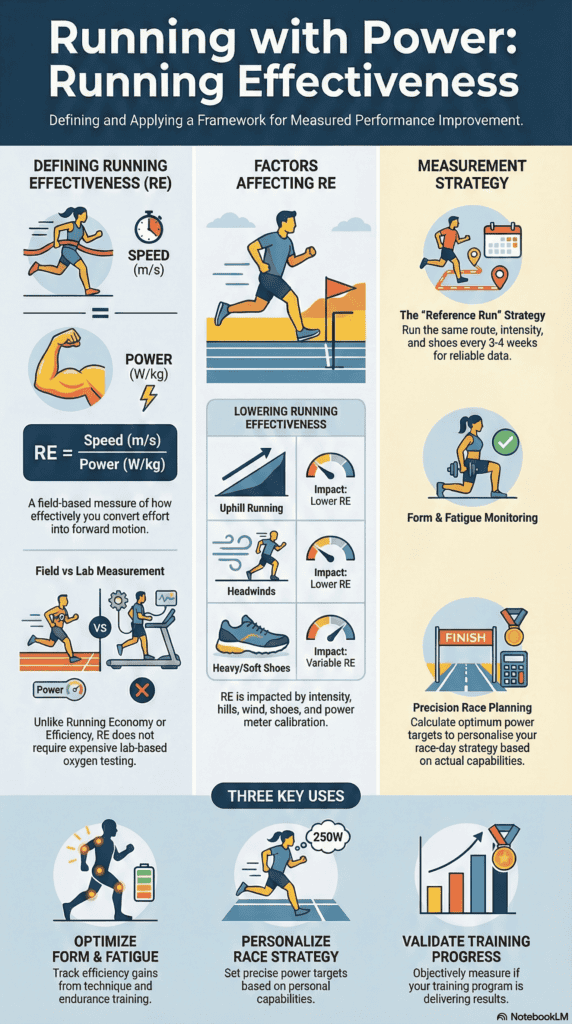
Infographic – Running Effectiveness

๐‘๐ฎ๐ง๐ง๐ข๐ง๐  ๐„๐Ÿ๐Ÿ๐ž๐œ๐ญ๐ข๐ฏ๐ž๐ง๐ž๐ฌ๐ฌ โ€ฆ ๐š๐ง ๐ข๐ง๐Ÿ๐จ๐ ๐ซ๐š๐ฉ๐ก๐ข๐œ

Something different this week.

My posts are usually quite short (200-300 words) and deliberately so.

Bitesize, for easy consumption; each a sequence of 5 posts, building throughout the week.

But this week โ€ฆ pictures!

One infographic per day on the core concepts underpinning Running with Power.

๐–๐ก๐ฒ ๐ข๐ง๐Ÿ๐จ๐ ๐ซ๐š๐ฉ๐ก๐ข๐œ๐ฌ?

Iโ€™m curious to see what AI can create from some handwritten posts.

Curious to discover how it presents the concepts.

Curious to see what it includes (and what it leaves out).

Curious to consider what the infographic says about the way Iโ€™ve written the content.

๐„๐š๐œ๐ก ๐๐š๐ฒ ๐ญ๐ก๐ข๐ฌ ๐ฐ๐ž๐ž๐ค

Iโ€™ll post an infographic generated by NotebookLM using the phrase โ€œPlease generate an infographic using the selected sourceโ€ โ€ฆ and for days 2 through 5 I add โ€œin the same style as the previous infographic.โ€

Iโ€™ll also include the URL for the source used for the infographic.

And Iโ€™d love to hear from you!

What do you think? Does the picture capture the concept? Does it help with understanding? Is it confusing? Could it be improved?

Todayโ€™s URL: https://startrunningwithpower.substack.com/p/how-effective-are-you-at-converting

๐‘บ๐’‰๐’๐’–๐’๐’…๐’’๐’• ๐’š๐’๐’– ๐’ƒ๐’† ๐‘น๐’–๐’๐’๐’Š๐’๐’ˆ ๐’˜๐’Š๐’•๐’‰ ๐‘ท๐’๐’˜๐’†๐’“?

โ“ Questions?
๐Ÿ“– Getting Started

Infographic – Running Effectiveness